Verse 19
Shlokamanuensis's hand
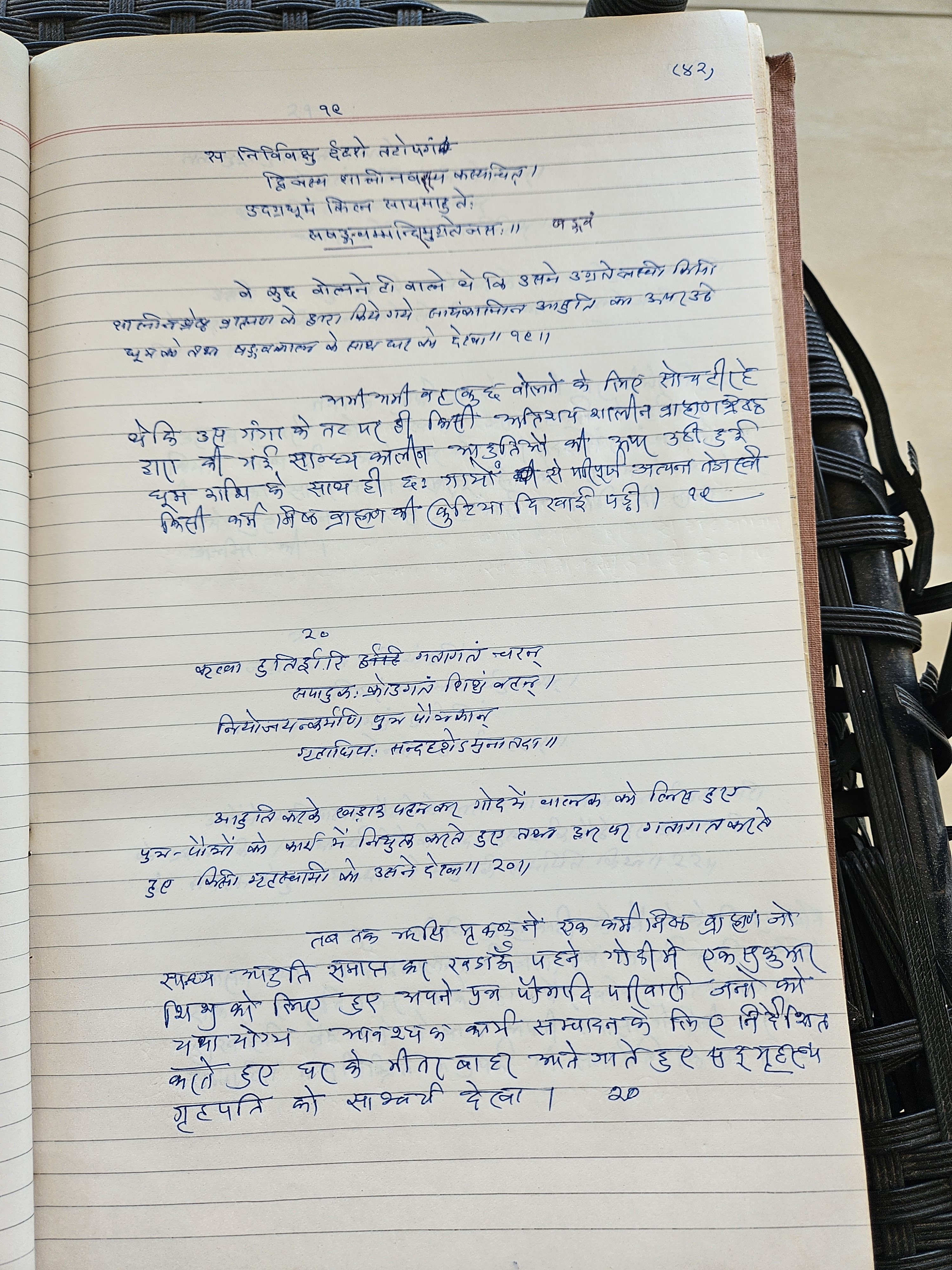
स निर्विविक्षुर्ददृशे तटोपगं
द्विजस्य शालीनवरस्य कस्यचित् ।
उदग्रधूमं किल सायमाहुतेः
सषड्गवं मन्दिरमुद्यतेजसः ॥ १९ ॥
Manuscript NoteAI-assisted transcription
वृत्त: वंशस्थ (चारों पाद शुद्ध)। पाद १ "निर्विविक्षुर्ददृशे" (पूर्व "निर्विविक्षुरीदृशो")।
Manuscript Note (EN)AI-assisted transcription
Metre: Vaṃśastha (all four pādas scan). Pāda 1 reads "निर्विविक्षुर्ददृशे" (earlier "निर्विविक्षुरीदृशो").
English Translation (of the Sanskrit)AI-assisted translation
Wishing to rest, he saw near the bank the house of some modest, excellent brahmin, of fierce radiance, with six cows, the smoke of the evening oblation rising high. (19)
Translationamanuensis's hand
वे कुछ बोलने ही वाले थे कि उसने उग्रतेजस्वी किसी शालीनश्रेष्ठ ब्राह्मण के द्वारा किये गये सायंकालीन आहुति का ऊपर उठे धूम को तथा षड्गव (छह गायों) के साथ घर को देखा ॥ १९ ॥
English Translation (of the Hindi)AI-assisted translation
He was just about to say something when he saw the smoke rising from the evening oblation made by some excellent, modest brahmin of fierce radiance, and his house with six cows. (19)
Notesgrandfather's hand
अभी अभी वह कुछ बोलने के लिए सोच ही रहे थे कि उस गङ्गा के तट पर ही किसी अतिशय शालीन ब्राह्मण श्रेष्ठ द्वारा की गई सान्ध्यकालीन आहुतियों की ऊपर उठी हुई धूम राशि के साथ ही छह गायों से परिपूर्ण अत्यन्त तेजस्वी किसी कर्मनिष्ठ ब्राह्मण की कुटिया दिखाई पड़ी । १९
English NotesAI-assisted translation
He was just now thinking of saying something when, on that very bank of the Gaṅgā, he saw the mass of smoke rising from the evening oblations made by some very modest, excellent brahmin, and with it the hut of some very radiant brahmin devoted to his duties, full of six cows. (19)
Verse 20
Shlokamanuensis's hand
कृत्वा हुतिं द्वारि बहिर्गतागतं चरन्
सपादुकः क्रोडगतं शिशुं वहन् ।
नियोजयन्कर्मणि पुत्रपौत्रकान्
गृहाधिपः सन्ददृशेऽमुना तदा ॥ २० ॥
Manuscript NoteAI-assisted transcription
वृत्त: वंशस्थ। पाद १ ("कृत्वा हुतिं द्वारि बहिर्गतागतं चरन्") पाण्डुलिपि में ऐसा ही लिखा है और छन्द से दो अक्षर लम्बा है; यथावत्।
Manuscript Note (EN)AI-assisted transcription
Metre: Vaṃśastha. Pāda 1 ("कृत्वा हुतिं द्वारि बहिर्गतागतं चरन्") is written so in the manuscript and is two syllables longer than the metre; kept as written.
English Translation (of the Sanskrit)AI-assisted translation
Having made the oblation, going in and out at the door, wearing sandals, carrying a child in his lap, setting his sons and grandsons to their work, the master of the house was then seen by him. (20)
Translationamanuensis's hand
आहुति करके खड़ाऊ पहनकर गोद में बालक को लिए हुए पुत्र-पौत्रों को कार्य में नियुक्त करते हुए तथा द्वार पर गतागत करते हुए किसी गृहस्वामी को उसने देखा ॥ २० ॥
English Translation (of the Hindi)AI-assisted translation
He saw a master of a house who, having made the oblation and put on wooden sandals, held a child in his lap, set his sons and grandsons to work, and was going in and out at the door. (20)
Notesgrandfather's hand
तब तक ऋषि मृकण्ड ने एक कर्मनिष्ठ ब्राह्मण जो सांध्य आहुति समाप्त कर खड़ाऊँ पहने गोदी में एक सुकुमार शिशु को लिए हुए अपने पुत्र पौत्रादि परिवारी जनों को यथायोग्य आवश्यक कार्य सम्पादन के लिए निर्देशित करते हुए घर के भीतर बाहर आते जाते हुए सद्गृहस्थ गृहपति को साश्चर्य देखा । २०
English NotesAI-assisted translation
Meanwhile the sage Mṛkaṇḍu saw with wonder a brahmin devoted to his duties, a good householder and master of the house, who had finished the evening oblation, wore wooden sandals, held a tender child in his lap, and was going in and out of the house directing his sons, grandsons and other family members to do the necessary work as fitting. (20)