Verse 3
Shlokamanuensis's hand
दाक्षिणा समुपदिष्टमाश्रमं
निश्चितं समयकारि गन्तुकः ।
तिर्यगग्निदिशि [unclear]
गङ्गया समनुमोदितो ययौ ॥ ३ ॥
Manuscript NoteAI-assisted transcription
वृत्त: रथोद्धता। पाद १ "दाक्षिणा" (= दक्षपुत्र दाक्षि द्वारा; टिप्पणी: "दक्षपुत्र (दधि)") और "समुपदिष्टम्" छन्द से; पूर्व पाठ "दाक्षिण्या समुद्दिष्ट मार्गं" (९ अक्षर) भ्रान्त था। पाद ३ का उत्तरार्ध अस्पष्ट है ("…वाहिनी…" जैसा); पूर्व पाठ "वह्निसंज्ञकायाम्" छन्द में नहीं बैठता। पाद ४ "गङ्गया" (पूर्व "गङ्गाया")।
Manuscript Note (EN)AI-assisted transcription
Metre: Rathoddhatā. Pāda 1 reads "दाक्षिणा" (by Dākṣi, Dakṣa's son; the note says "दक्षपुत्र") and "समुपदिष्टम्", as the metre requires; the earlier "दाक्षिण्या समुद्दिष्ट मार्गं" (nine syllables) was wrong. The second half of pāda 3 is unclear (it looks like "…वाहिनी…"); the earlier "वह्निसंज्ञकायाम्" does not scan. Pāda 4 reads "गङ्गया" (earlier "गङ्गाया").
English Translation (of the Sanskrit)AI-assisted translation
Having fixed on the hermitage pointed out by Dākṣi, the traveller, keeping to his time, set out in the oblique, south-eastern direction [unclear], with the Gaṅgā's assent. (3)
Translationamanuensis's hand
वह चलने वाला महात्मा दक्ष (चातुर) के द्वारा निर्दिष्ट आश्रम का निश्चय कर मार्ग में तिरछे अग्निकोण वाले मार्ग पर गङ्गा से अनुमोदित हो चल पड़े ॥ ३ ॥
English Translation (of the Hindi)AI-assisted translation
That travelling great soul, having settled on the hermitage pointed out by Dakṣa [the Hindi glosses "(चातुर)", "clever one"; the Sanskrit "दाक्षिण्या" suggests Dākṣi], set out on the road slanting toward the south-east, with the Gaṅgā's approval. (3)
Notesgrandfather's hand
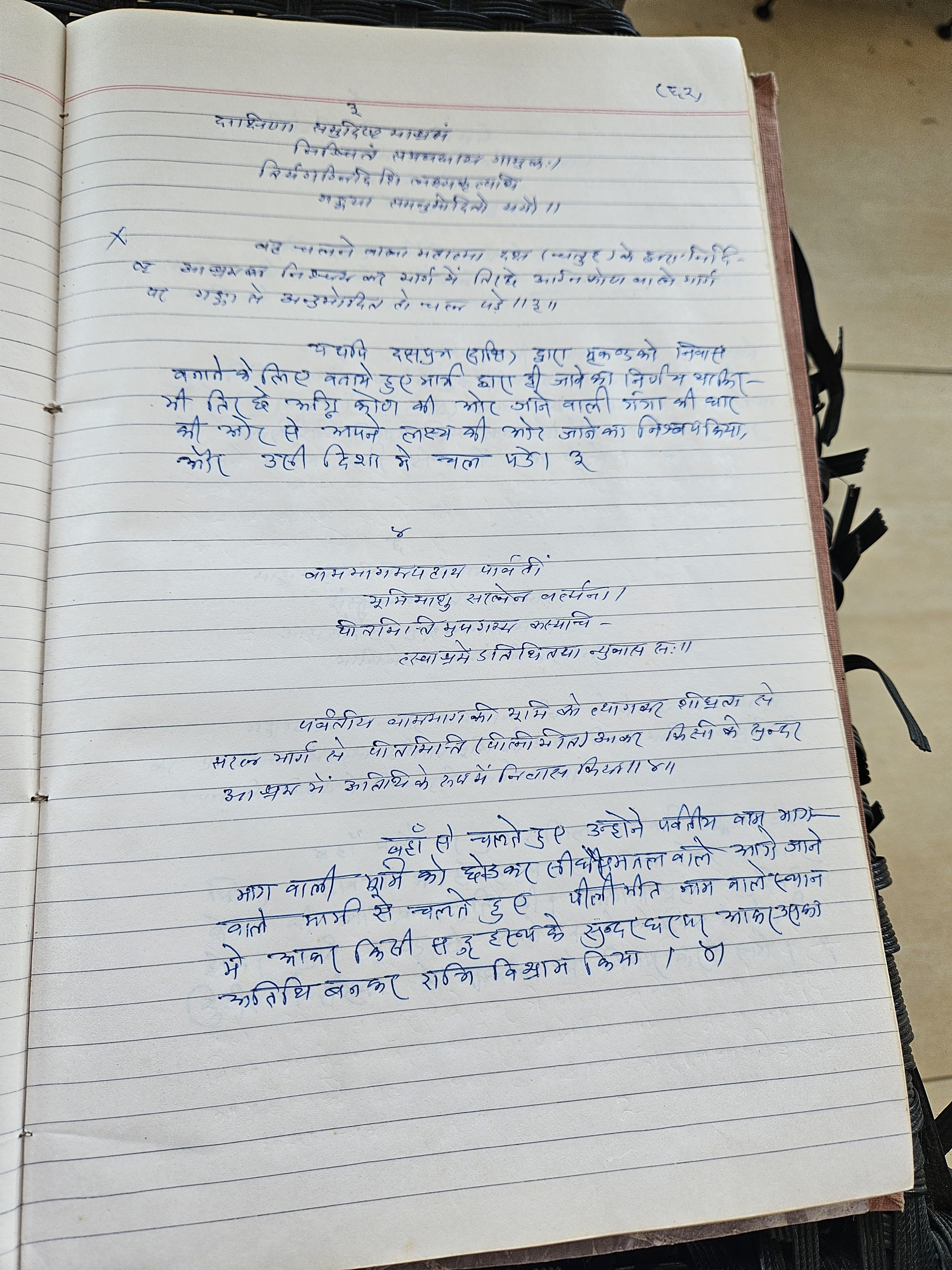
यद्यपि दक्षपुत्र (दधि) द्वारा मृकण्ड को निवास बनाने के लिए बताये हुए मार्ग द्वारा ही जाने का निर्णय था फिर-भी तिरछे अग्नि कोण की ओर जाने वाली गङ्गा की धार की ओर से अपने लक्ष्य की ओर जाने का निश्चय किया, और उसी दिशा में चल पड़े । ३
English NotesAI-assisted translation
Although the decision was to go only by the road shown to Mṛkaṇḍa by Dakṣa's son [the notes as transcribed add "(दधि)"; probably Dākṣi] for making his dwelling, he nonetheless decided to go toward his goal along the Gaṅgā's stream, which runs slanting toward the south-east, and set out in that direction. (3)
Verse 4
Shlokamanuensis's hand
वामभागमपहाय पार्वतीं
भूमिमाशु सरलेन वर्त्मना ।
पीतभित्तिमुपगम्य कस्यचि-
दाश्रमेऽतिथितया न्युवास सः ॥ ४ ॥
Manuscript NoteAI-assisted transcription
वृत्त: रथोद्धता (चारों पाद शुद्ध)। पाद ४ का आरम्भ पाण्डुलिपि में अधिलिखित है; छन्द और सन्धि ("कस्यचिद् आश्रमे") से "दाश्रमे" पढ़ा गया (पूर्व पाठ "त्तस्याश्रमे")।
Manuscript Note (EN)AI-assisted transcription
Metre: Rathoddhatā (all four pādas scan). The opening of pāda 4 is overwritten in the manuscript; "दाश्रमे" is read from the metre and the sandhi ("कस्यचिद् आश्रमे"); the earlier reading was "त्तस्याश्रमे".
English Translation (of the Sanskrit)AI-assisted translation
Leaving the hilly land on his left and going quickly by a straight road, he reached Pītabhitti and lodged as a guest in someone's hermitage there. (4)
Translationamanuensis's hand
पर्वतीय वामभाग की भूमि को त्यागकर शीघ्रता से सरल मार्ग से पीतभित्ति (पीलीभीत) आकर किसी के सुन्दर आश्रम में अतिथि के रूप में निवास किया ॥ ४ ॥
English Translation (of the Hindi)AI-assisted translation
Leaving the hilly land on his left, he went quickly by a straight road to Pītabhitti (Pīlībhīt), and stayed as a guest in someone's lovely hermitage. (4)
Notesgrandfather's hand
वहाँ से चलते हुए उन्होंने पर्वतीय वाम् भाग वाले भूमि को छोड़कर सीधे समतल वाले आगे जाने वाले मार्ग से चलते हुए पीलीभीत नाम वाले स्थान में आकर किसी सद्गृहस्थ के सुन्दर घर या आश्रम को अतिथि बनकर रात्रि विश्राम किया । ४
English NotesAI-assisted translation
Going on from there, he left the hilly land on his left, walked along the straight road ahead over level ground, came to a place named Pīlībhīt, and spent the night as a guest in some good householder's lovely house or hermitage. (4)