Verse 32
Shlokamanuensis's hand
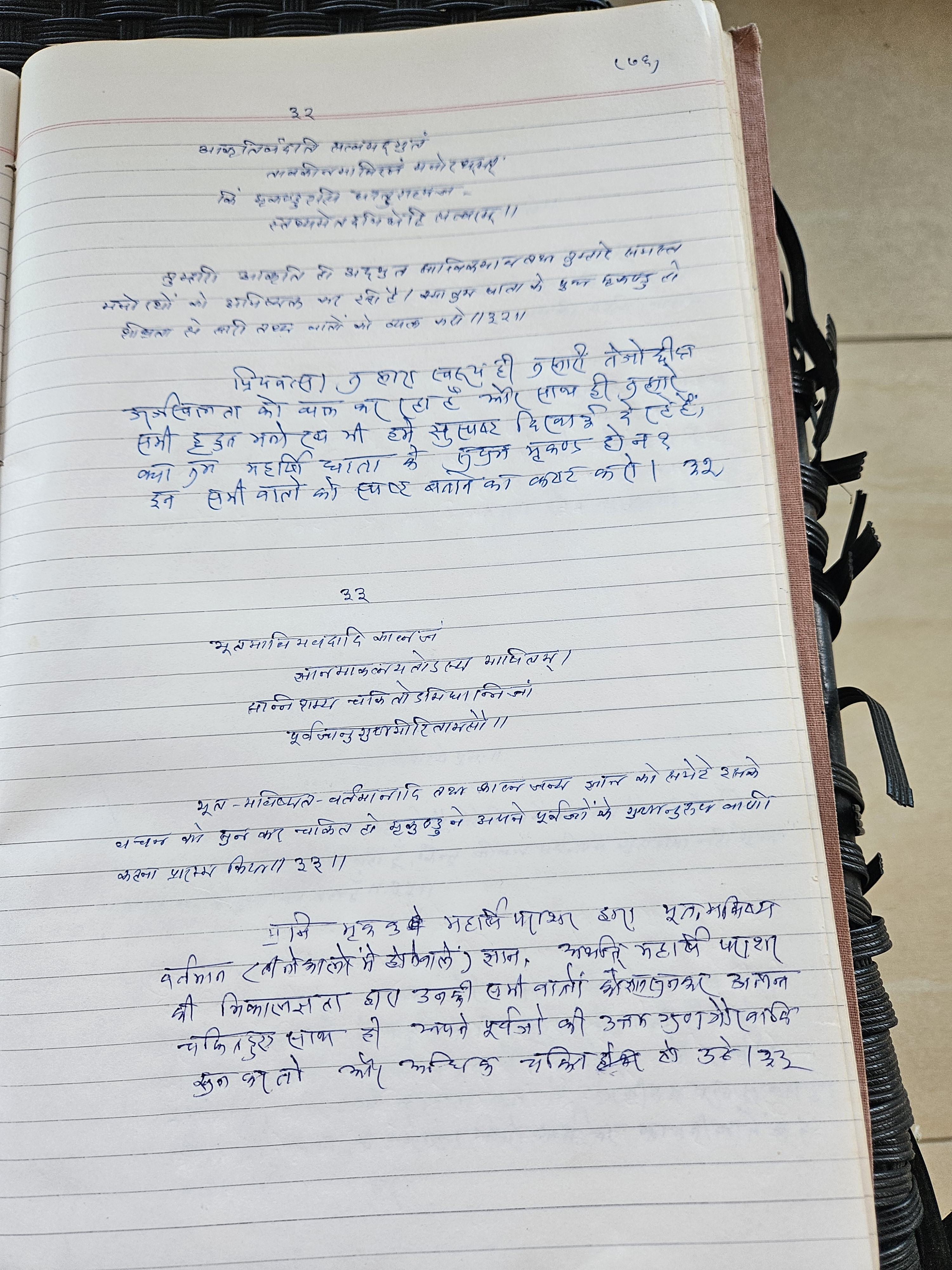
आकृतिर्वदति सत्यमद्भुतं
तावकीनमखिलं मनोरथम् ।
किं मृकण्डुरसि धातुरात्मज-
स्तच्छ्रुतोऽस्यभिधेहि सत्वरम् ॥ ३२ ॥
Manuscript NoteAI-assisted transcription
वृत्त: रथोद्धता। पाद २ "मखिलं मनोरथम्", पाद ३ "धातुरात्मज-" (पूर्व "धात्रजस्त्वया")। पाद ४ का आरम्भ अस्पष्ट है ("लक्ष्यसे"/"स्तच्छ्रुतो…"); "…भिधेहि सत्वरम्" सुपाठ्य है, पूर्व पाठ "तदपि ब्रूहि" छन्द में नहीं बैठता।
Manuscript Note (EN)AI-assisted transcription
Metre: Rathoddhatā. Pāda 2 reads "मखिलं मनोरथम्", and pāda 3 "धातुरात्मज-" (earlier "धात्रजस्त्वया"). The opening of pāda 4 is unclear ("लक्ष्यसे" or "स्तच्छ्रुतो…"); "…भिधेहि सत्वरम्" is legible, and the earlier "तदपि ब्रूहि" does not scan.
English Translation (of the Sanskrit)AI-assisted translation
"Your appearance tells, truly and wonderfully, all your wishes. Are you Mṛkaṇḍu, the son of Dhātā? Tell me quickly." [The opening of pāda 4 is unclear.] (32)
Translationamanuensis's hand
तुम्हारी आकृति ही अद्भुत सात्विकभाव तथा तुम्हारे समस्त मनोरथों को अभिव्यक्त कर रही है। क्या तुम धाता के पुत्र मृकण्डु हो शीघ्रता से सारी स्पष्ट बातों को व्यक्त करो॥ ३२॥
English Translation (of the Hindi)AI-assisted translation
"Your very appearance expresses a wonderful sāttvika feeling and all your wishes. Are you Mṛkaṇḍu, son of Dhātā? Quickly say everything plainly." (32)
Notesgrandfather's hand
प्रियवत्स! तुम्हारा स्वरूप ही तुम्हारी तेजोदीप्त उर्जस्विता को व्यक्त कर रहा है और साथ ही तुम्हारे सभी हृद्गत मनोरथ भी हमें सुस्पष्ट दिखाई दे रहे हैं। क्या तुम महर्षि धाता के सुपुत्र मृकण्ड हो न? इन सभी बातों को स्पष्ट बताने का कष्ट करो। ३२
English NotesAI-assisted translation
"Dear child! Your form itself shows your radiant vigour, and at the same time all the wishes in your heart are clearly visible to us. You are Mṛkaṇḍa, the good son of Maharṣi Dhātā, are you not? Please be so kind as to say all these things plainly." (32)
Verse 33
Shlokamanuensis's hand
भूतभाव्यभवदादि कालजं
ज्ञानमाकलयतोऽस्य भाषितम्।
सान्निशम्य चकितोऽभिधाय निजां
पूर्वजान् सुचरितानभासत॥ ३३॥
Manuscript NoteAI-assisted transcription
वृत्त: रथोद्धता। पाद ३ पाण्डुलिपि में "…चकितोऽभिधां निजां" जैसा है (छन्द-शुद्ध); पाद ३–४ का आरम्भ अस्पष्ट है, पूर्व पाठ यथावत्।
Manuscript Note (EN)AI-assisted transcription
Metre: Rathoddhatā. Pāda 3 looks like "…चकितोऽभिधां निजां" in the manuscript (which scans); the openings of pādas 3–4 are unclear, and the earlier reading is kept.
English Translation (of the Sanskrit)AI-assisted translation
Hearing the words of this one, who grasped knowledge born of time, past, future and present, [Mṛkaṇḍu,] amazed, named himself and spoke of his ancestors and their good conduct. (33)
Translationamanuensis's hand
भूत-भविष्यत-वर्तमान आदि तथा कालजन्य ज्ञान को समेटे उनके वचन को सुन कर चकित हो मुकण्डु ने अपने पूर्वजों के गुणानुरूप वाणी कहना प्रारम्भ किया॥ ३३॥
English Translation (of the Hindi)AI-assisted translation
Hearing his words, which gathered up knowledge of past, future and present, born of time, Mṛkaṇḍu was amazed and began to speak words befitting the virtues of his ancestors. (33)
Notesgrandfather's hand
मुनि मृकण्डु महर्षि पराशर द्वारा भूत, भविष्य वर्तमान (तीनों कालों में होने वाले) ज्ञान, अर्थात् महर्षि पराशर की त्रिकालज्ञता द्वारा उनकी सारी बातों को सुन सुनकर अत्यन्त चकित हुए साथ ही अपने पूर्वजों की उत्तम गुणगौरवादि सुन कर तो और अधिक चकित हो ही उठे। ३३
English NotesAI-assisted translation
The sage Mṛkaṇḍu, hearing all that Maharṣi Parāśara said through his knowledge of past, future and present (what happens in all three times), that is, through Maharṣi Parāśara's knowledge of the three times, was very amazed; and on hearing the excellent virtues and glory of his own ancestors he became more amazed still. (33)