Verse 31
Shlokamanuensis's hand
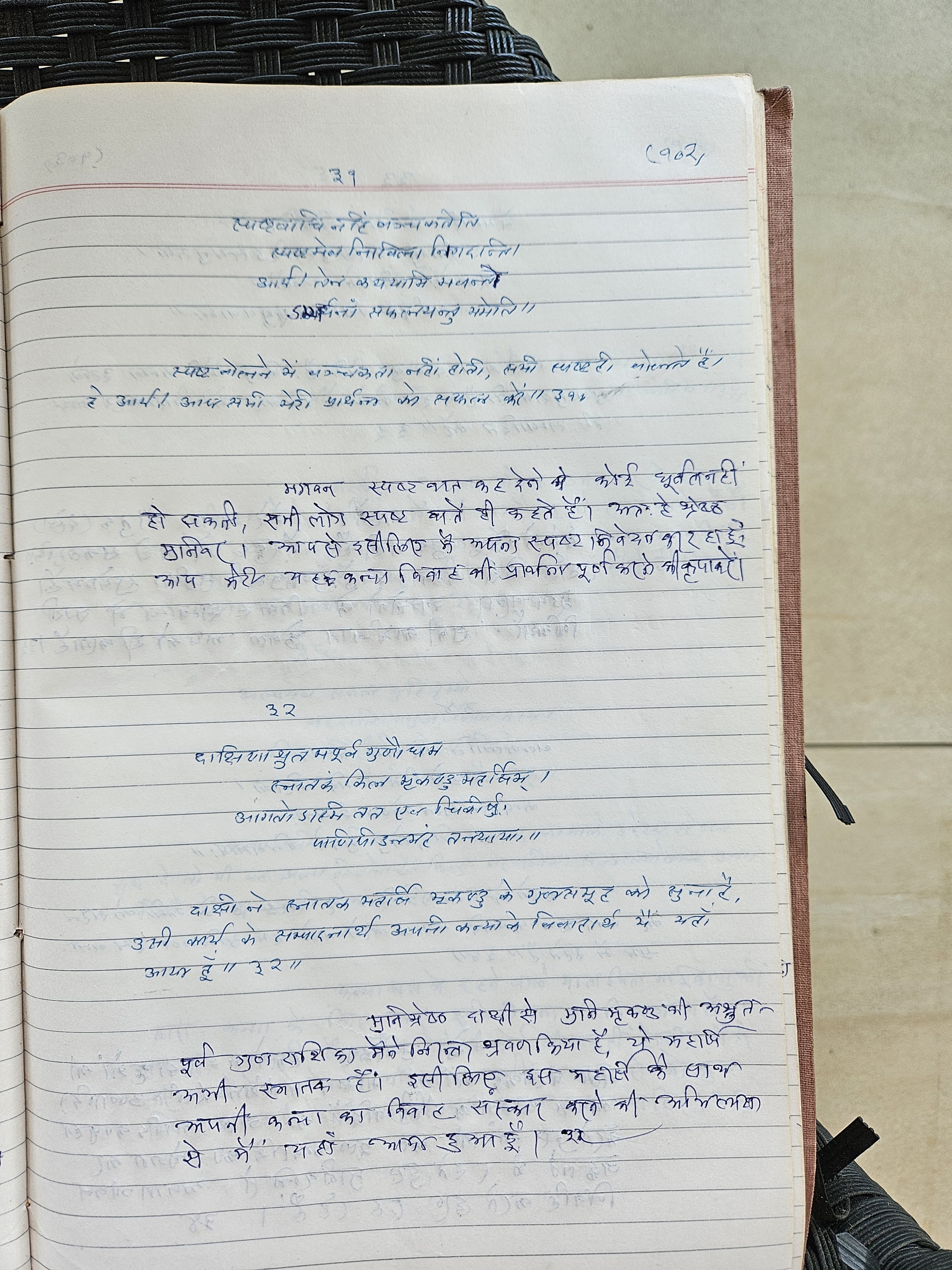
स्पष्टवाचि न हि वञ्चकतेति
स्पष्टमेव निखिला निगदन्ति ।
आर्य! तेन कथयामि भवन्तं
प्रार्थनां सफलयन्तु [unclear: भवन्तः] ॥ ३१ ॥
Manuscript NoteAI-assisted transcription
वृत्त: स्वागता। पाद ३ का अन्तिम शब्द ("भवन्तं"/"भवन्तौ") अधिलिखित है। पाद ४ का आरम्भ ("प्रार्थनां") किसी पूर्व पाठ पर लिखा गया है, और अन्तिम शब्द अस्पष्ट है।
Manuscript Note (EN)AI-assisted transcription
Metre: Svāgatā. The last word of pāda 3 ("भवन्तं"/"भवन्तौ") is overwritten. The beginning of pāda 4 ("प्रार्थनां") is written over an earlier reading, and the last word is unclear.
English Translation (of the Sanskrit)AI-assisted translation
"In plain speech there is no deceit, so all people speak plainly. Therefore, noble one, I say it to you: may your honours make my request fruitful." (31)
Translationamanuensis's hand
स्पष्ट बोलने में वञ्चकता नहीं होती, सभी स्पष्ट ही बोलते हैं। हे आर्य! आप सभी मेरी प्रार्थना को सफल करें ॥ ३१ ॥
English Translation (of the Hindi)AI-assisted translation
"There is no deceit in speaking plainly; everyone speaks plainly. Noble one! May all of you make my request successful." (31)
Notesgrandfather's hand
भगवन् स्पष्ट बात कह देने में कोई धूर्तता नहीं हो सकती, सभी लोग स्पष्ट बातें ही कहते हैं। अतः हे श्रेष्ठ मुनिवर! आपसे इसीलिए मैं अपना स्पष्ट निवेदन कर रहा हूँ, आप मेरी यह कन्या विवाह की प्रार्थना पूर्ण करने की कृपा करें। ३१
English NotesAI-assisted translation
"Lord, there can be no cunning in saying a thing plainly; everyone speaks plainly. That is why, O best of sages, I am putting my request to you plainly: please be gracious enough to grant this request of mine for my daughter's marriage." (31)
Verse 32
Shlokamanuensis's hand
दाक्षिणा श्रुतमपूर्वगुणौघं
स्नातकं किल मृकण्डुमहर्षिम् ।
आगतोऽस्मि तत एव चिकीर्षुः
पाणिपीडनमहं तनयायाः ॥ ३२ ॥
Manuscript NoteAI-assisted transcription
वृत्त: स्वागता। पाद १ "दाक्षिणा श्रुतम्" — "दाक्षिणा" दाक्षि का तृतीया एकवचन है ("दाक्षि द्वारा सुना गया"), जो अनुवाद के "दाक्षी ने ... सुना है" से पुष्ट होता है। पूर्व निष्कासन का "दाक्षिणाच्छ्रुतम्" (पञ्चमी) व्याकरण-सम्मत नहीं था (दाक्षि की पञ्चमी "दाक्षेः" होती)।
Manuscript Note (EN)AI-assisted transcription
Metre: Svāgatā. Pāda 1 reads "दाक्षिणा श्रुतम्": "दाक्षिणा" is the instrumental singular of Dākṣi ("heard by Dākṣi"), confirmed by the Hindi "दाक्षी ने ... सुना है". The earlier export's "दाक्षिणाच्छ्रुतम्" (ablative) was ungrammatical; the ablative of Dākṣi would be "दाक्षेः".
English Translation (of the Sanskrit)AI-assisted translation
"The great sage Mṛkaṇḍu, a snātaka, whose flood of unrivalled virtues Dākṣi has heard of: for that very reason I have come, wishing to perform my daughter's marriage." (32)
Translationamanuensis's hand
दाक्षी ने स्नातक महर्षि मृकण्डु के गुणसमूह को सुना है, उसी कार्य के सम्पादनार्थ अपनी कन्या के विवाहार्थ मैं यहाँ आया हूँ ॥ ३२ ॥
English Translation (of the Hindi)AI-assisted translation
"Dākṣi has heard of the virtues of the snātaka Maharṣi Mṛkaṇḍu; to carry out that very purpose, the marriage of my daughter, I have come here." (32)
Notesgrandfather's hand
मुनिश्रेष्ठ दाक्षी से मुनि मृकण्डु की अद्भुत पूर्व गुण राशि का मैंने निरन्तर श्रवण किया है, ये महर्षि अभी स्नातक हैं। इसीलिए इस महर्षि के साथ अपनी कन्या का विवाह संस्कार करने की अभिलाषा से मैं यहाँ आया हुआ हूँ। ३२
English NotesAI-assisted translation
"From the excellent sage Dākṣi I have constantly heard of the wonderful store of virtues of Sage Mṛkaṇḍu, and that this great sage is still a snātaka. That is why I have come here, wishing to celebrate my daughter's marriage with this great sage." (32)