Verse 7
Shlokamanuensis's hand
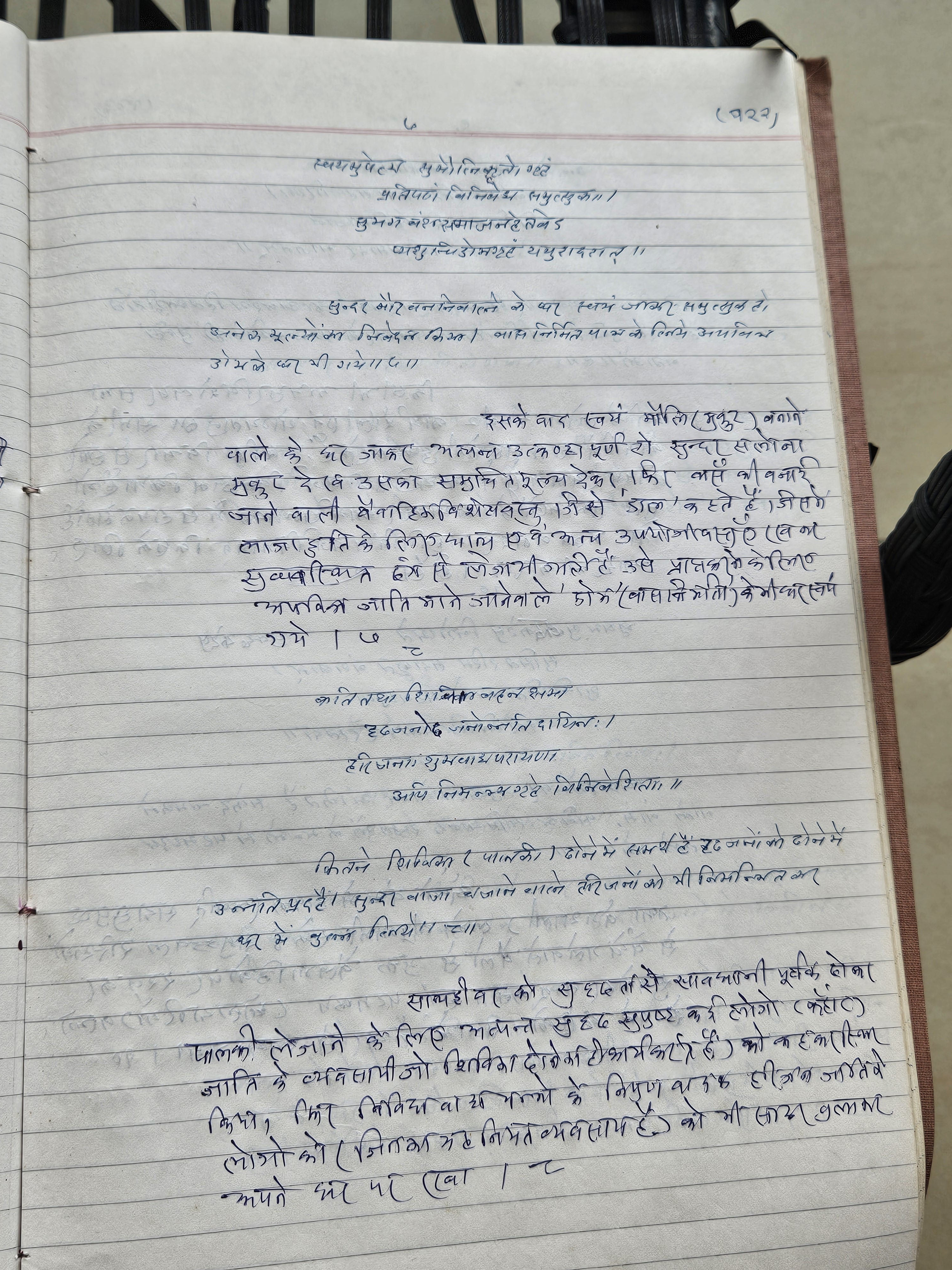
स्वयमुपेत्य सुमौलिकृतो गृहं
प्रतिपणं विनिवेद्य समुत्सुकः ।
सुभगवंशसुभाजनहेतवे-
ह्यशुचिडोमगृहं ययुरादरात् ॥ ७ ॥
Manuscript NoteAI-assisted transcription
वृत्त: द्रुतविलम्बित। तृतीय पाद "…हेतवेऽ" अवग्रह-चिह्न सहित लिखा है; चतुर्थ पाद का प्रथम अक्षर "ह्य" (यही अक्षर-रूप पृ. ११९, श्लोक २ के चतुर्थ पाद में भी है)।
Manuscript Note (EN)AI-assisted transcription
Metre: Drutavilambita. Pāda 3 is written "…हेतवेऽ" with an avagraha. The first letter of pāda 4 is "ह्य"; the same letter-form appears in pāda 4 of v. 2 on p. 119.
English Translation (of the Sanskrit)AI-assisted translation
Going himself, eager, to the house of the maker of fine crowns, he offered a price for each piece; and for a lovely bamboo vessel they went respectfully even to the house of a Ḍom, held unclean. (7)
Translationamanuensis's hand
सुन्दर मौर बनाने वाले के घर स्वयं जाकर समुत्सुक हो, अनेक मूल्यों का निवेदन किया। बाँस निर्मित पात्र के लिये अपवित्र डोम के घर भी गये ॥ ७ ॥
English Translation (of the Hindi)AI-assisted translation
Going himself, eager, to the house of the maker of fine wedding crowns, he offered many prices. For a vessel made of bamboo they went even to the house of the unclean Ḍom. (7)
Notesgrandfather's hand
इसके बाद स्वयं मौलि (मुकुट) बनाने वाले के घर जाकर अत्यन्त उत्कण्ठा पूर्ण हो सुन्दर सलोना मुकुट देख उसका समुचित मूल्य देकर, फिर बाँस की बनाई जाने वाली वैवाहिक विशेष वस्तु, जिसे 'डाल' कहते हैं, जिसमें लाजा इत्यादि के लिए थाल एवं अन्य उपयोगी वस्तुएँ रख कर सुव्यवस्थित ढंग से ले जाई जाती हैं, उसे प्राप्त करने के लिए अपवित्र जाति माने जाने वाले 'डोम' [unclear: (बाँस की जाति)] के घर स्वयं गये। ७
English NotesAI-assisted translation
After this he himself went, full of eagerness, to the house of the maker of mauli (crowns). Having seen a beautiful, charming crown, he paid its proper price. Then, to obtain the special wedding article made of bamboo called a 'ḍāl', in which a platter for the parched grain (lājā) and other useful things are carried in good order, he went in person to the house of a 'Ḍom', a caste held to be unclean [unclear: (a bamboo-working caste)]. (7)
Verse 8
Shlokamanuensis's hand
कति तथा शिबिकावहनक्षमा
दृढजनो [unclear: हि] जनोन्नतिदायिनः ।
हरिजनाः शुभवाद्यपरायणा
अपि निमन्त्र्य गृहे विनिवेशिताः ॥ ८ ॥
Manuscript NoteAI-assisted transcription
वृत्त: द्रुतविलम्बित। प्रथम पाद "शिबिका" पर लिपिकार ने एक अक्षर काटकर सुधारा है। द्वितीय पाद में "जनो" के बाद एक अक्षर पर लेखन-सुधार है ("ह"/"ऽ" जैसा); छन्द के अनुसार एक लघु अक्षर चाहिए, "हि" अनुमानित।
Manuscript Note (EN)AI-assisted transcription
Metre: Drutavilambita. In pāda 1 the amanuensis struck out a letter in "शिबिका" and corrected it. In pāda 2, after "जनो", one letter is overwritten (it looks like "ह" or "ऽ"); the metre needs a light syllable, and "हि" is a guess.
English Translation (of the Sanskrit)AI-assisted translation
So too, how many sturdy men able to carry the palanquin, men who bring honour to people, and Harijans devoted to auspicious music, were invited and lodged in the house! (8)
Translationamanuensis's hand
कितने शिविका (पालकी) ढोने में समर्थ हैं, दृढजनों को ढोने में उन्नतिप्रद हैं। सुन्दर बाजा बजाने वाले हरिजनों को भी निमन्त्रित कर घर में बुला लिये ॥ ८ ॥
English Translation (of the Hindi)AI-assisted translation
How many are able to carry the palanquin, sturdy men who bring advancement by their carrying! The Harijans who play fine music were also invited and called to the house. (8)
Notesgrandfather's hand
साथ ही वर को सुदृढता से सावधानी पूर्वक ढोकर पालकी ले जाने के लिए अत्यन्त सुदृढ सुपुष्ट कई लोगों (कहार) को कहकर [unclear: तैयार] किया (कहार जाति के व्यवसायी जो शिविका ढोने का ही कार्य करते हैं), फिर विविध वाद्य बजाने में निपुण कुछ हरिजन जाति के लोगों को (जिनका यह [unclear: निमित्त] व्यवसाय है) को भी साथ बुलाकर अपने घर पर रखा। ८
English NotesAI-assisted translation
At the same time, to carry the bridegroom's palanquin firmly and carefully, he asked several very strong, well-built men (kahārs) and [unclear: got them ready] (kahārs are a caste whose trade is carrying palanquins). Then he also called some people of the Harijan caste skilled in playing various instruments (this being their [unclear: hereditary] trade) and kept them at his house. (8)