Verse 17
Shlokamanuensis's hand
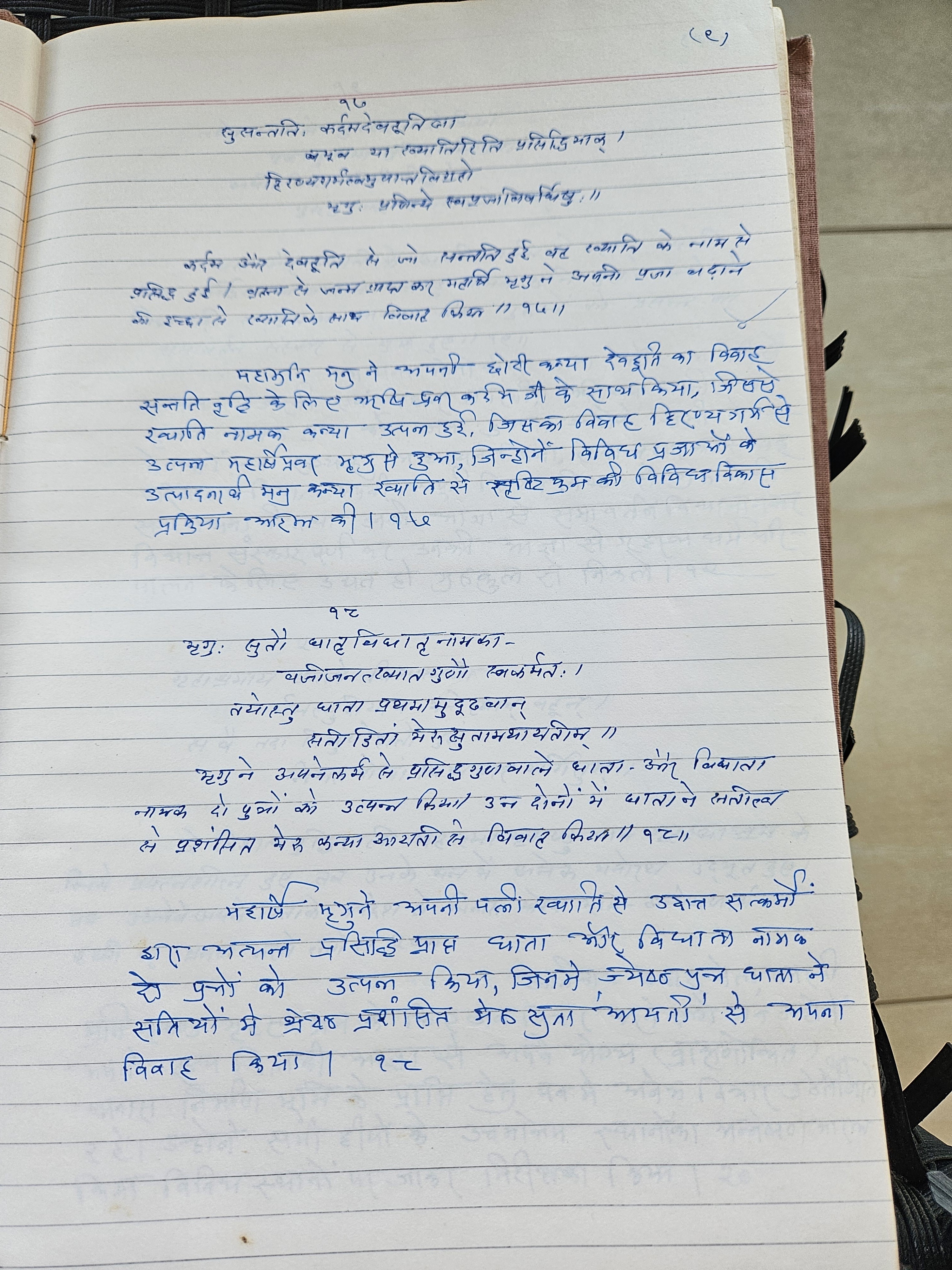
सुसन्ततिः कर्दमदेवहूतिजा
बभूव या ख्यातिरिति प्रसिद्धिभाक् ।
हिरण्यगर्भात्प्रभवाप्तलिप्सितो
भृगुः प्रजिघ्ये स्वप्रजाविवर्धिषुः ॥ १७ ॥
Manuscript NoteAI-assisted transcription
वृत्त: वंशस्थ। पाद ३ और ४ का पाठ कुछ अनिश्चित है ("प्रभवाप्तलिप्सितो", "प्रजिघ्ये")। पूर्व पाठ "…वदन्न या ख्यातिरिति प्रसिद्धिमान् / हिरण्यगर्भीय मुतायसो / यया प्रजाभ्यः स्वाभिमताविधिश्चुः" भ्रान्त था।
Manuscript Note (EN)AI-assisted transcription
Metre: Vaṃśastha. The readings of pādas 3 and 4 ("प्रभवाप्तलिप्सितो", "प्रजिघ्ये") are somewhat uncertain. The earlier reading ("…वदन्न या ख्यातिरिति प्रसिद्धिमान् / हिरण्यगर्भीय मुतायसो / यया प्रजाभ्यः स्वाभिमताविधिश्चुः") was wrong.
English Translation (of the Sanskrit)AI-assisted translation
The fine offspring born of Kardama and Devahūti became famous by the name Khyāti; Bhṛgu, born of Hiraṇyagarbha, wishing to increase his own progeny, [took her as wife]. [Lines 3–4 partly unclear.] (17)
Translationamanuensis's hand
कर्दम और देवहूति से जो सन्तति हुई वह ख्याति के नाम से प्रसिद्ध हुई। ब्रह्मा से जन्म प्राप्त कर महर्षि भृगु ने अपनी प्रजा बढ़ाने की इच्छा से ख्याति के साथ विवाह किया ॥ १७ ॥
English Translation (of the Hindi)AI-assisted translation
The offspring born of Kardama and Devahūti became famous by the name Khyāti. Maharṣi Bhṛgu, born of Brahmā, married Khyāti, wishing to increase his progeny. (17)
Notesgrandfather's hand
महामुनि मनु ने अपनी छोटी कन्या देवहूति का विवाह सन्तति वृद्धि के लिए ऋषिप्रवर कर्दम जी के साथ किया, जिससे ख्याति नामक कन्या उत्पन्न हुई, जिसका विवाह हिरण्यगर्भ से उत्पन्न महर्षिप्रवर भृगु से हुआ, जिन्होंने विविध प्रजाओं के उत्पादनार्थ मनुकन्या ख्याति से सृष्टिक्रम की विविध विकास प्रक्रिया आरम्भ की। १७
English NotesAI-assisted translation
For the increase of offspring, the great sage Manu married his younger daughter Devahūti to the excellent sage Kardama. From them a daughter named Khyāti was born, who was married to the excellent maharṣi Bhṛgu, born of Hiraṇyagarbha; to produce various kinds of creatures, he began with Khyāti, [grand]daughter of Manu, the varied process of developing the order of creation. (17)
Verse 18
Shlokamanuensis's hand
भृगुः सुतौ धातृविधातृनामका-
वजीजनत्ख्यातगुणौ स्वकर्मतः ।
तयोस्तु धाता प्रथमामुदूढवान्
सतीडितां मेरुसुतामथायतीम् ॥ १८ ॥
Manuscript NoteAI-assisted transcription
वृत्त: वंशस्थ। पूर्व पाठ "…वजीजनत्ख्यातौ गुणौ एकाकर्मतः / … सताडितां मेरुसुताममायतीम्" भ्रान्त था।
Manuscript Note (EN)AI-assisted transcription
Metre: Vaṃśastha. The earlier reading ("…वजीजनत्ख्यातौ गुणौ एकाकर्मतः / … सताडितां मेरुसुताममायतीम्") was wrong.
English Translation (of the Sanskrit)AI-assisted translation
Bhṛgu begot two sons, named Dhātā and Vidhātā, renowned in virtue through their deeds; of the two, Dhātā first married Āyatī, Meru's daughter, praised by the virtuous. (18)
Translationamanuensis's hand
भृगु ने अपने कर्म से प्रसिद्ध गुणवाले धाता और विधाता नामक दो पुत्रों को उत्पन्न किया। उन दोनों में धाता ने सतीत्व से प्रशंसित मेरु कन्या आयती से विवाह किया ॥ १८ ॥
English Translation (of the Hindi)AI-assisted translation
Bhṛgu, by his deeds, begot two sons of renowned qualities, named Dhātā and Vidhātā. Of the two, Dhātā married Āyatī, Meru's daughter, praised for her chastity. (18)
Notesgrandfather's hand
महर्षि भृगु ने अपनी पत्नी ख्याति से उदात्त सत्कर्मों द्वारा अत्यन्त प्रसिद्धि प्राप्त धाता और विधाता नामक दो पुत्रों को उत्पन्न किया, जिनमें ज्येष्ठ पुत्र धाता ने सतियों में श्रेष्ठ प्रशंसित मेरुसुता 'आयती' से अपना विवाह किया। १८
English NotesAI-assisted translation
Through his wife Khyāti, Maharṣi Bhṛgu begot two sons named Dhātā and Vidhātā, who became very famous through their noble good deeds. Of them the elder son, Dhātā, married Āyatī, the celebrated daughter of Meru, best among chaste women. (18)