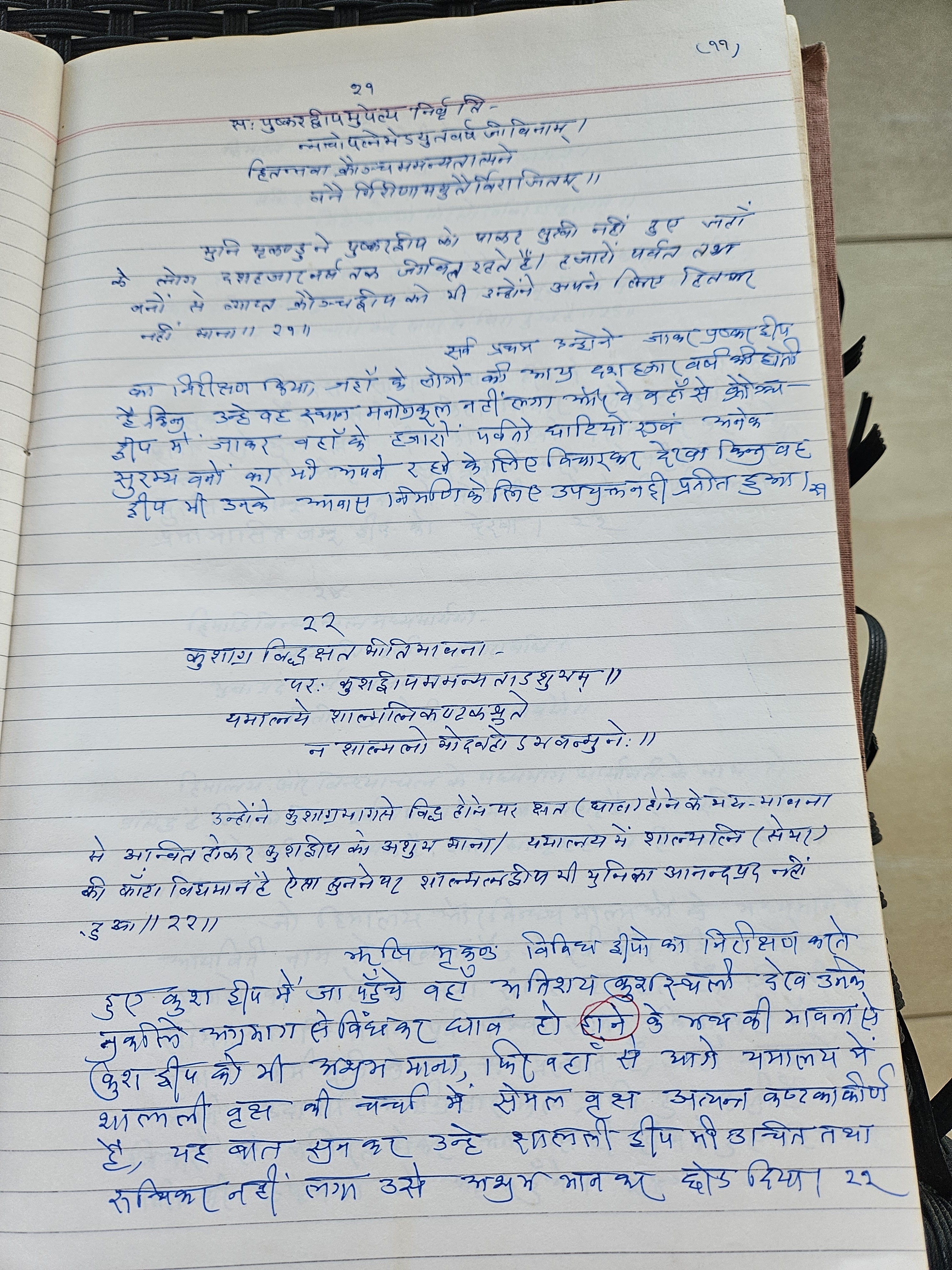
Verse 21
Shlokamanuensis's hand
सः पुष्करद्वीपमुपेत्य निर्वृतिं
न्यचोपलेभेऽयुतवर्षजीविनाम् ।
हितन्नवा क्रौञ्चममन्यतात्मने
वनैर्गिरीणामयुतैर्विराजितम् ॥ २१ ॥
Manuscript NoteAI-assisted transcription
वृत्त: वंशस्थ। पाद २ "न्यचोपलेभे" (= नैवोपलेभे) हस्तलेख का पाठ है। पूर्व पाठ "…न्यको पालेभेऽयुतवर्षजीविनाम् / सहस्रशैलैः समनन्तशालिनो / वने विश्रामममुलेर्विराजितम्" भ्रान्त था; पाद ३ में "क्रौञ्च" स्पष्ट है।
Manuscript Note (EN)AI-assisted transcription
Metre: Vaṃśastha. Pāda 2 "न्यचोपलेभे" (= naivopalebhe) is the manuscript reading. The earlier reading ("…न्यको पालेभेऽयुतवर्षजीविनाम् / सहस्रशैलैः समनन्तशालिनो / वने विश्रामममुलेर्विराजितम्") was wrong; "क्रौञ्च" is clear in pāda 3.
English Translation (of the Sanskrit)AI-assisted translation
Reaching Puṣkaradvīpa, [land] of people who live ten thousand years, he found no contentment; nor did he think Krauñca, adorned with forests and ten thousand mountains, good for himself. (21)
Translationamanuensis's hand
मुनि मृकण्डु ने पुष्करद्वीप को पाकर सुखी नहीं हुए जहाँ के लोग दश हजार वर्ष तक जीवित रहते हैं। हजारों पर्वत तथा वनों से व्याप्त क्रौञ्चद्वीप को भी उन्होंने अपने लिए हितकर नहीं माना ॥ २१ ॥
English Translation (of the Hindi)AI-assisted translation
Sage Mṛkaṇḍu reached Puṣkaradvīpa, where people live for ten thousand years, but was not content. Nor did he consider Krauñcadvīpa, full of thousands of mountains and forests, good for himself. (21)
Notesgrandfather's hand
सर्वप्रथम उन्होंने जाकर पुष्करद्वीप का निरीक्षण किया, जहाँ के लोगों की आयु दश हजार वर्ष की होती है किन्तु उन्हें वह स्थान मनोऽनुकूल नहीं लगा और वे वहाँ से क्रौञ्च द्वीप में जाकर वहाँ के हजारों पर्वतों, घाटियों एवं अनेक सुरम्य वनों का भी अपने रहने के लिए विचार कर देखा किन्तु वह द्वीप भी उनके आवास निर्माण के लिए उपयुक्त नहीं प्रतीत हुआ। २१
English NotesAI-assisted translation
First he went and inspected Puṣkaradvīpa, where people's lifespan is ten thousand years, but the place did not suit his mind. From there he went to Krauñcadvīpa and looked over its thousands of mountains, valleys and many lovely forests too, considering them as places to live; but that dvīpa too did not seem suitable for building his dwelling. (21)
Verse 22
Shlokamanuensis's hand
कुशाग्रविद्धक्षतभीतिभावना-
परः कुशद्वीपममन्यताऽशुभम् ।
यमालये शाल्मलिकण्टकश्रुते
न शाल्मली मोदवहोऽभवन्मुनेः ॥ २२ ॥
Manuscript NoteAI-assisted transcription
वृत्त: वंशस्थ। पूर्व पाठ "…भीतिभाषणम् / … यमालये शाल्मलिकण्टकाकुले / न शाल्मली मोदनही बभूव मुनेः" भ्रान्त था।
Manuscript Note (EN)AI-assisted transcription
Metre: Vaṃśastha. The earlier reading ("…भीतिभाषणम् / … यमालये शाल्मलिकण्टकाकुले / न शाल्मली मोदनही बभूव मुनेः") was wrong.
English Translation (of the Sanskrit)AI-assisted translation
Moved by the fear of being pierced and wounded by the tips of kuśa grass, he thought Kuśadvīpa inauspicious; and since he had heard of the śālmali thorns in Yama's abode, Śālmali gave the sage no joy. (22)
Translationamanuensis's hand
उन्होंने कुशाग्र भाग से विद्ध होने पर क्षत (आहत) होने के भय-भावना से भावित होकर कुशद्वीप को अशुभ माना। यमालय में शाल्मलि (सेमर) के काँटों से व्याप्त ऐसा सुनने पर शाल्मलीद्वीप की भूमि भी आनन्दप्रद नहीं हुई ॥ २२ ॥
English Translation (of the Hindi)AI-assisted translation
Moved by the fear of being pierced and wounded by the tips of kuśa grass, he considered Kuśadvīpa inauspicious. Hearing that in Yama's abode there are thorny śālmali (silk-cotton) trees, the land of Śālmalidvīpa too gave him no joy. (22)
Notesgrandfather's hand
ऋषि मृकण्डु विविध द्वीपों का निरीक्षण करते हुए कुश द्वीप में जा पहुँचे वहाँ अतिशय कुशस्थली देख उनके नुकीले अग्रभाग से बिंधकर घाव हो जाने के भय की भावना से (कुश द्वीप को) भी अशुभ माना, फिर वहाँ से आगे यमालय में शाल्मली वृक्ष की चर्चा में सेमल वृक्ष अत्यन्त कण्टकाकीर्ण है, यह बात सुनकर उन्हें शाल्मली द्वीप भी वाञ्छित तथा रुचिकर नहीं लगा उसे भी अशुभ मान छोड़ दिया ॥ २२ ॥
English NotesAI-assisted translation
Inspecting the various dvīpas, the sage Mṛkaṇḍu reached Kuśadvīpa. Seeing land thick with kuśa grass there, he feared that its sharp tips would pierce and wound him, and considered Kuśadvīpa inauspicious too. Then, hearing in talk of the śālmali tree in Yama's abode that the silk-cotton tree is very thorny, he did not find Śālmalidvīpa desirable or pleasing either; he considered it inauspicious and left it. (22)