Verse 33
Shlokamanuensis's hand
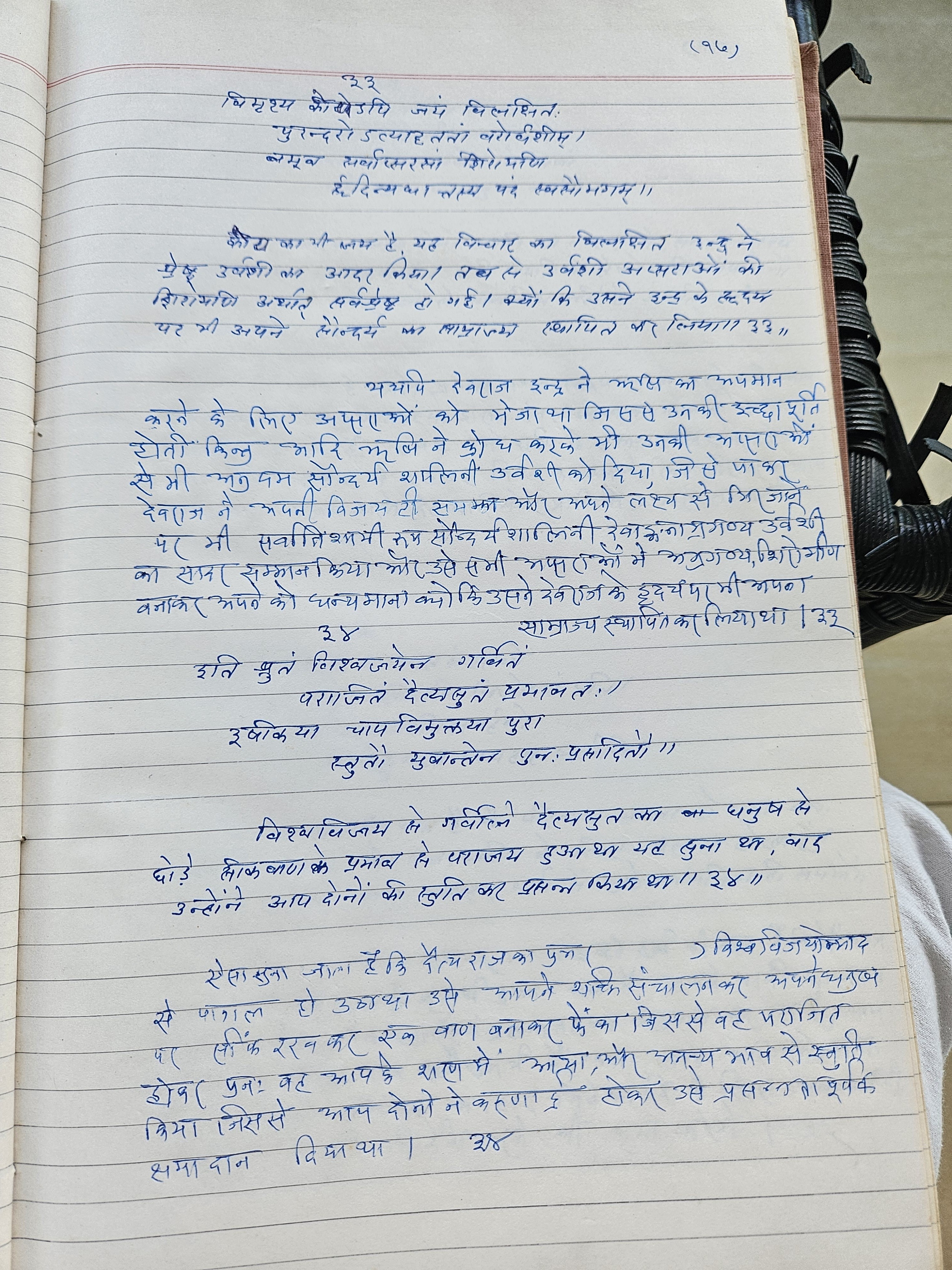
विमृश्य कोपेऽपि जयं विलक्षितः
पुरन्दरोऽप्यादृतवान् वरोर्वशीम् ।
बभूव सर्वाप्सरसां शिरोमणि-
र्हृदि व्यधात्तस्य पदं स्वसौभगम् ॥ ३३ ॥
Manuscript NoteAI-assisted transcription
वृत्त: वंशस्थ (चारों पाद शुद्ध)। पाद १ "कोपेऽपि" का अक्षर अधिलिखित (overwritten) है। पाद २ "ऽप्यादृतवान्" हिन्दी ("आदर किया") के आधार पर पढ़ा गया; अक्षर "ऽप्याहृततां" जैसे दिखते हैं। पाद ४ "हृदि व्यधात्" पाण्डुलिपि में "हृदित्वधात्" जैसा लिखा है। पूर्व पाठ "को येउति / इल्याह्रततां न गर्दिशीम् / नमून / र्हिदन्यथातत्य परं स्थलोमगम्" भ्रान्त था।
Manuscript Note (EN)AI-assisted transcription
Metre: Vaṃśastha (all four pādas scan). In pāda 1 the akṣara of "कोपेऽपि" is overwritten. In pāda 2, "ऽप्यादृतवान्" is read with the help of the Hindi ("honoured"); the letters look like "ऽप्याहृततां". In pāda 4, "हृदि व्यधात्" is written like "हृदित्वधात्". The earlier reading ("को येउति / इल्याह्रततां न गर्दिशीम् / नमून / र्हिदन्यथातत्य परं स्थलोमगम्") was wrong.
English Translation (of the Sanskrit)AI-assisted translation
Reflecting that there was victory even in [the sages'] anger, Purandara (Indra), abashed, honoured the excellent Urvaśī. She became the crest-jewel of all the apsarases, and set her own beauty's foothold in his heart. (33)
Translationamanuensis's hand
क्रोध का भी जय है, यह विचार कर विलक्षित इन्द्र ने श्रेष्ठ उर्वशी का आदर किया। तब से उर्वशी अप्सराओं की शिरोमणि अर्थात् सर्वश्रेष्ठ हो गई। क्योंकि उसने इन्द्र के हृदय पर भी अपने सौन्दर्य का साम्राज्य स्थापित कर लिया ॥ ३३ ॥
English Translation (of the Hindi)AI-assisted translation
Thinking, "There is victory even in anger", the abashed Indra honoured the excellent Urvaśī. From then on Urvaśī became the crest-jewel of the apsarases, that is, the very best, for she established the empire of her beauty even over Indra's heart. (33)
Notesgrandfather's hand
यद्यपि देवराज इन्द्र ने ऋषि का अपमान करने के लिए अप्सराओं को भेजा था जिससे उनकी इच्छापूर्ति होती किन्तु आदि ऋषि ने क्रोध करके भी उनकी अप्सराओं से भी अनुपम सौन्दर्यशालिनी उर्वशी को दिया, जिसे पाकर देवराज ने अपनी विजय ही समझा और अपने लक्ष्य से गिर जाने पर भी सर्वातिशायी रूपसौन्दर्यशालिनी देवाङ्गनाग्रगण्य उर्वशी का सादर सम्मान किया और उसे सभी अप्सराओं में अग्रगण्य, शिरोमणि बनाकर अपने को धन्य माना क्योंकि उसने देवराज के हृदय पर भी अपना साम्राज्य स्थापित कर लिया था। ३३
English NotesAI-assisted translation
Although Indra, king of the gods, had sent the apsarases to insult the sage, so that his wish would be fulfilled, the primal sage, even in anger, gave him Urvaśī, more matchlessly beautiful than even his apsarases. On receiving her, the king of the gods took it as his own victory; even though he had fallen short of his aim, he respectfully honoured Urvaśī, foremost of the divine women, whose beauty surpassed all, made her the foremost, the crest-jewel, among all the apsarases, and considered himself blessed, for she had established her empire even over the heart of the king of the gods. (33)
Verse 34
Shlokamanuensis's hand
इति श्रुतं विश्वजयेन गर्वितं
पराजितं दैत्यसुतं प्रभावतः ।
इषीकया चापविमुक्तया पुरा
स्तुतौ युवां तेन पुनः प्रसादितौ ॥ ३४ ॥
Manuscript NoteAI-assisted transcription
वृत्त: वंशस्थ (चारों पाद शुद्ध)। पाद ४ "युवां तेन" पाण्डुलिपि में "सुवान्तेन" जैसा दिखता है (य/स समान); अर्थ से "युवां तेन"। पूर्व पाठ "गर्वित / पराजित दैत्यमुते / प्रलादितौ" में मात्रा-त्रुटियाँ थीं।
Manuscript Note (EN)AI-assisted transcription
Metre: Vaṃśastha (all four pādas scan). In pāda 4, "युवां तेन" looks like "सुवान्तेन" (य and स are alike in this hand); the sense requires "युवां तेन". The earlier reading ("गर्वित / पराजित दैत्यमुते / प्रलादितौ") had letter errors.
English Translation (of the Sanskrit)AI-assisted translation
"So I have heard: long ago the son of a daitya, proud of conquering the world, was defeated by your power with a reed shot from a bow; you two were then praised by him and propitiated once more." (34)
Translationamanuensis's hand
विश्वविजय से गर्वीले दैत्यसुत का धनुष से छोड़े सींक-बाण के प्रभाव से पराजय हुआ था यह सुना था, बाद उन्होंने आप दोनों की स्तुति कर प्रसन्न किया था ॥ ३४ ॥
English Translation (of the Hindi)AI-assisted translation
"I had heard that the son of a daitya, proud from conquering the world, was defeated by the power of a reed arrow shot from a bow; afterwards he praised you both and pleased you." (34)
Notesgrandfather's hand
ऐसा सुना जाता है कि दैत्यराज का पुत्र ( ) विश्वविजयोन्माद से पागल हो उठा था उसे आपने शक्ति संचालन कर अपने धनुष पर सींक रखकर एक बाण बनाकर फेंका जिससे वह पराजित होकर पुनः वह आपके शरण में आया, और अनन्य भाव से स्तुति किया जिससे आप दोनों ने करुणार्द्र होकर उसे प्रसन्नतापूर्वक क्षमादान दिया था। ३४
English NotesAI-assisted translation
"It is heard that the son of the daitya king ( ) [the name is left blank in the manuscript] had gone mad with the frenzy of conquering the world. Applying your power, you set a reed on your bow, made it an arrow and shot it at him; defeated by it, he came again to take refuge with you and praised you with undivided devotion, so that you both, melting with compassion, gladly forgave him." (34)