Verse 5
Shlokamanuensis's hand
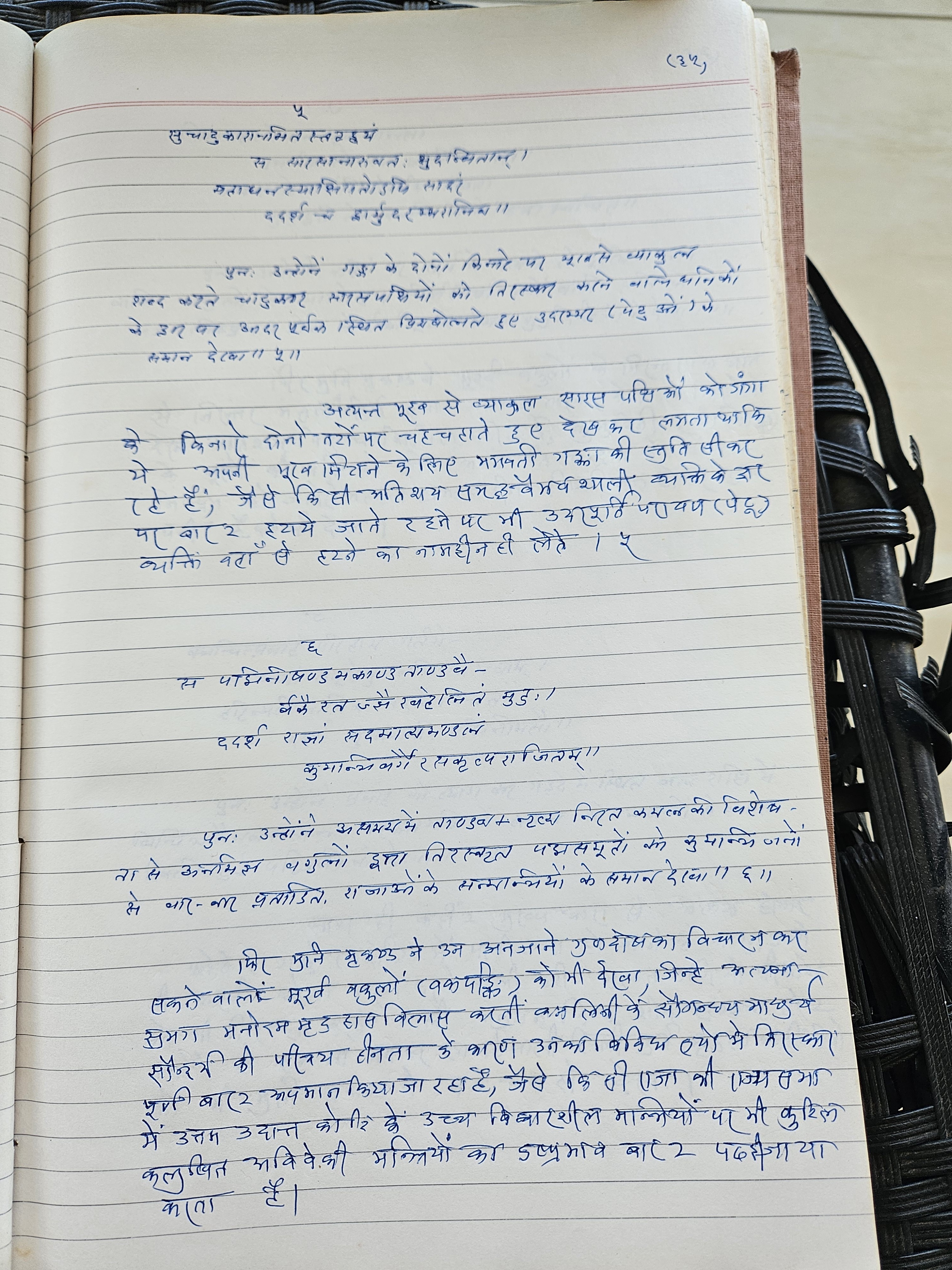
सुचाटुकारानमितस्तरद्वयं
स सारसानांरुवतः क्षुधन्वितान् ।
महाधनस्यापिगतोऽपि सादरं
ददर्श च द्वावुदरम्भरानिव ॥ ५ ॥
Manuscript NoteAI-assisted transcription
वृत्त: वंशस्थ। पाद ४ "च द्वावुदरम्भरान्" (पूर्व "च ह्युदरम्भरान्", एक अक्षर कम); "द्वा" अक्षर कुछ अनिश्चित।
Manuscript Note (EN)AI-assisted transcription
Metre: Vaṃśastha. Pāda 4 reads "च द्वावुदरम्भरान्" (the earlier "च ह्युदरम्भरान्" is one syllable short); the akṣara "द्वा" is somewhat uncertain.
English Translation (of the Sanskrit)AI-assisted translation
He saw the sāras cranes on both banks, crying with hunger, flatterers, like belly-fillers who, though [repulsed], wait respectfully at the door of a rich man. (5)
Translationamanuensis's hand
पुनः उन्होंने गङ्गा के दोनों किनारे पर भूख से व्याकुल शब्द करते चाटुकार सारसपक्षियों को तिरस्कार करने वाले धनिकों के द्वार पर आदर पूर्वक स्थित प्रिय बोलते हुए उदरम्भर (पेटू जनों) के समान देखा ॥ ५ ॥
English Translation (of the Hindi)AI-assisted translation
Again, on both banks of the Gaṅgā, he saw flattering sāras birds, crying out in distress from hunger, like belly-fillers (gluttons) who stand respectfully at the doors of rich men who scorn them, speaking sweetly. (5)
Notesgrandfather's hand
अत्यन्त भूख से व्याकुल सारस पक्षियों को गङ्गा के किनारे दोनो तटों पर चहचहाते हुए देखकर लगता था कि ये अपनी भूख मिटाने के लिए भगवती गङ्गा की स्तुति ही कर रहे हैं; जैसे किसी अतिशय समृद्धिवैभवशाली व्यक्ति के द्वार पर बार २ हटाये जाते रहने पर भी उदरपूर्ति परायण (पेटू) व्यक्ति वहाँ से हटने का नाम ही नहीं लेते । ५
English NotesAI-assisted translation
Seeing the sāras birds, very distressed by hunger, chattering on both banks of the Gaṅgā, it seemed that they were only praising the goddess Gaṅgā to satisfy their hunger; just as, at the door of some very prosperous and wealthy person, people devoted to filling their bellies (gluttons) do not think of leaving even when driven away again and again. (5)
Verse 6
Shlokamanuensis's hand
स पद्मिनीखण्ड मकाण्ड ताण्डवै-
र्बकै रतज्जै रहदेलितं मुहुः ।
ददर्श राज्ञां सदमात्यमण्डलं
कुमान्त्र्यवर्गै रसकृत्पराजितम् ॥ ६ ॥
English Translation (of the Sanskrit)AI-assisted translation
He saw a cluster of lotuses again and again disturbed by herons, ignorant of them, with untimely tāṇḍava dances, like the circle of a king's good ministers repeatedly defeated by groups of bad ministers. (6)
Translationamanuensis's hand
पुनः उन्होंने असमय में ताण्डव-नृत्य निरत कमल की विशेषता से अनभिज्ञ बगुलों द्वारा तिरस्कृत पद्मसमूहों को कुमान्त्र्य जनों से बार-बार प्रताड़ित, राजाओं के सन्मान्त्रियों के समान देखा ॥ ६ ॥
English Translation (of the Hindi)AI-assisted translation
Again he saw clusters of lotuses scorned by herons engaged in an untimely tāṇḍava dance and ignorant of the lotus's excellence, like the good ministers of kings repeatedly harassed by bad ministers. (6)
Notesgrandfather's hand
फिर मुनि मृकण्डु ने उन अनजाने गुणदोष का विचार न कर सकने वालों मूर्ख बगुलों (बकपङ्क्ति) को भी देखा, जिन्हें अत्यन्त सुभग मनोरम मृदु हास विलास करती कमलिनी के सौगन्ध्य माधुर्य सौन्दर्य की परिचय हीनता के कारण उनका विविध रूपों में तिरस्कार पूर्वक बार २ अपमान किया जा रहा है, जैसे किसी राजा की राज्य सभा में उत्तम उदात्त कोटि के उच्च विचारशील मन्त्रियों पर भी कुटिल कलुषित अविवेकी मन्त्रियों का दुष्प्रभाव बार २ पड़ता या डाला जाता है ।
English NotesAI-assisted translation
Then the sage Mṛkaṇḍu also saw those foolish herons (a row of herons), who could not judge merit and fault, by whom the very lovely, charming lotus, playing with soft laughter, was again and again insulted and scorned in various ways because they did not know her fragrance, sweetness and beauty; just as, in a king's council, the bad influence of crooked, impure, undiscerning ministers falls, or is brought to bear, again and again even on excellent, noble, high-minded ministers. (6)