Verse 38
Shlokamanuensis's hand
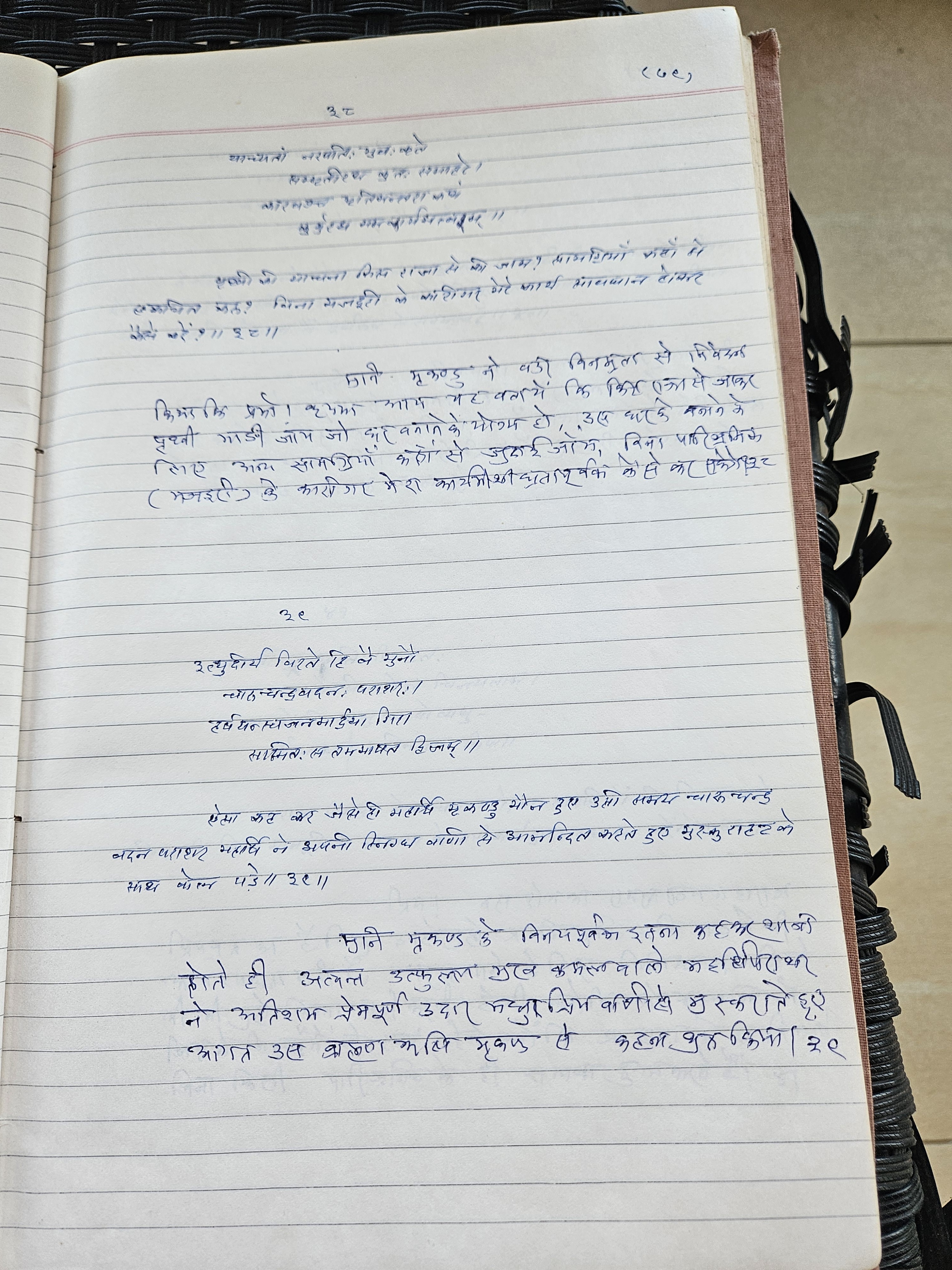
याच्यतां नरपतिः पुनः कतः
सम्भृतेश्च कृत-सम्भरेत्।
कारुकैश्च परिश्रमेण वा
कुर्वते स्म मम कार्यमुत्सुकम्॥ ३८॥
Manuscript NoteAI-assisted transcription
वृत्त: रथोद्धता। पाद २–३ छन्द में नहीं बैठते (पाद २ में केवल ९ अक्षर); पाण्डुलिपि में फीके हैं; पुनः पठन आवश्यक।
Manuscript Note (EN)AI-assisted transcription
Metre: Rathoddhatā. Pādas 2–3 do not scan (pāda 2 has only nine syllables); they are faint in the manuscript and need re-reading.
English Translation (of the Sanskrit)AI-assisted translation
"From which king should [land] be asked? From where [should] the materials be gathered? And how would workmen, by their labour, eagerly do my work?" [Partly corrupt.] (38)
Translationamanuensis's hand
पृथ्वी की याचना किस राजा से की जाय? सामग्रियों कहाँ से सम्पादित करूँ? बिना मजदूरी के कारीगर मेरे कार्य सावधान होकर कैसे करें?॥ ३८॥
English Translation (of the Hindi)AI-assisted translation
"From which sovereign king should land be petitioned? From where should the building materials be procured? And how will artisans and craftsmen carry out my work attentively without wages?" (Verse 38)
Notesgrandfather's hand
मुनि मृकण्डु ने बड़ी विनम्रता से निवेदन किया कि प्रभो! कृपया आप यह बतावें कि किस राजा से जाकर पृथ्वी माँगी जाय जो घर बनाने के योग्य हो, उस घर के बनाने के लिए अन्य सामग्रियों कहाँ से जुटाई जायँ, बिना पारिश्रमिक (मजदूरी) के कारीगर मेरा कार्य भी भलीभांति उत्साह पूर्वक कैसे कर सकेंगे? ३८
English NotesAI-assisted translation
The sage Mṛkaṇḍu very humbly asked: "Lord! Please tell me which king I should go to and ask for land fit to build a house on; where the other materials for building that house should be gathered from; and how craftsmen will be able to do my work well and eagerly without payment (wages)." (38)
Verse 39
Shlokamanuensis's hand
इत्युदीर्य विरते हि वै मुनौ
चारुचन्द्रवदनः पराशरः।
हर्षयन् स्वजनमार्द्रया गिरा
सस्मितः स तमभाषत द्विजम्॥ ३९॥
Manuscript NoteAI-assisted transcription
हस्तलेख पाठभेद/लिपि-टिप्पणी: पाद ३ में पाण्डुलिपि में `हर्षयन् स्वजनमार्जया गिरा` दृष्टिगोचर होता है, जो `स्वजनम् आर्द्रया गिरा` (अथवा मार्दवया गिरा) का वाचक है। वृत्त: रथोद्धता
Manuscript Note (EN)AI-assisted transcription
Paleographic / Textual Note: In line 3, the amanuensis writes `हर्षयन् स्वजनमार्जया गिरा`, representing `स्वजनम् आर्द्रया गिरा` [gladdening his kin with tender, soothing words]. Meter: Rathoddhatā [– ⏑ – | ⏑ ⏑ ⏑ | – ⏑ – | ⏑ –]
English Translation (of the Sanskrit)AI-assisted translation
When the sage had said this and fallen silent, Parāśara, his face lovely as the moon, gladdening his own [visitor] with tender speech, spoke with a smile to that brahmin. (39)
Translationamanuensis's hand
ऐसा कह कर जैसे ही महर्षि मृकण्डु मौन हुए उसी समय चारुचन्द्र वदन पराशर महर्षि ने अपनी स्निग्ध वाणी से आनन्दित करते हुए मुस्कुराहट के साथ बोल पड़े॥ ३९॥
English Translation (of the Hindi)AI-assisted translation
As soon as Maharṣi Mṛkaṇḍu fell silent after saying this, Maharṣi Parāśara, whose face was lovely as the moon, gladdening him with his tender speech, spoke with a smile. (39)
Notesgrandfather's hand
मुनि मृकण्डु के विनयपूर्वक इतना कहकर शान्त होते ही अत्यन्त उत्फुल्ल मुख कमल वाले महर्षि पराशर ने अतिशय प्रेमपूर्ण उदार मधुर स्निग्ध वाणी से मुस्कराते हुए आगत उस ब्राह्मण ऋषि मृकण्डु से कहना शुरू किया। ३९
English NotesAI-assisted translation
As soon as the sage Mṛkaṇḍu, having humbly said this much, fell silent, Maharṣi Parāśara, whose lotus face was in full bloom, began to speak with a smile, in a very loving, generous, sweet and tender voice, to that brahmin sage Mṛkaṇḍu who had come. (39)