Verse 40
Shlokamanuensis's hand
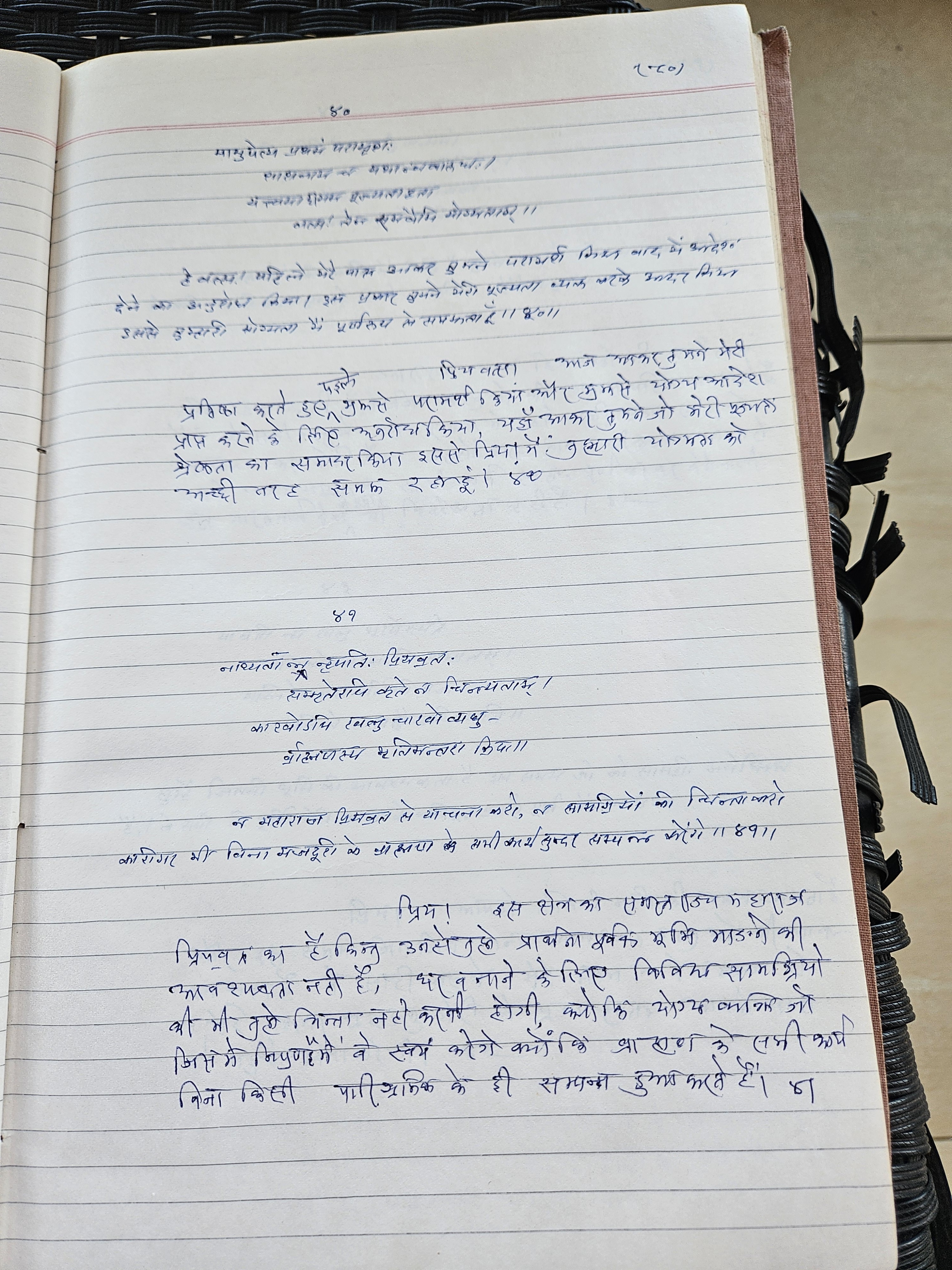
मामुपेत्य प्रथमं परामृशन्
शासनाय च ममोद्यतो ह्यभूत्।
यत्त्वया व्यधित पूज्यता मम
मान्य! तेन सुगुणोऽसि योग्यतः॥ ४०॥
Manuscript NoteAI-assisted transcription
वृत्त: रथोद्धता। पाद १ में "प्र" से पूर्व ह्रस्व को लघु माना गया है (कवि की छूट)।
Manuscript Note (EN)AI-assisted transcription
Metre: Rathoddhatā. In pāda 1 the short vowel before "प्र" is treated as light (the poet's licence).
English Translation (of the Sanskrit)AI-assisted translation
"Coming to me first, consulting me, you were ready for my instruction; since you have shown me reverence, honoured one, by that you are of good qualities and worthy." (40)
Translationamanuensis's hand
हे वत्स! पहिले मेरे पास आकर तुमने परामर्श किया बाद में आदेश देने का अनुरोध किया। इस प्रकार तुमने मेरी पूज्यता व्यक्त करके आदर किया उससे तुम्हारी योग्यता मैं पूर्णरूप से समझता हूँ॥ ४०॥
English Translation (of the Hindi)AI-assisted translation
"Child! You first came to me and consulted me, and then asked me to give directions. Since you have honoured me by showing my worthiness of reverence, I understand your fitness fully." (40)
Notesgrandfather's hand
प्रिय वत्स! पहिले यहाँ आकर तुमने मेरी प्रशंसा करते हुए मुझसे परामर्श किया और मुझसे योग्य आदेश प्राप्त करने के लिए अनुरोध किया, यहाँ आकर तुमने जो मेरी पूज्यता श्रेष्ठता का समादर किया इससे क्रिया में तुम्हारी योग्यता को अच्छी तरह समझ रहा हूँ। ४०
English NotesAI-assisted translation
"Dear child! Coming here first, you praised me, consulted me and asked to receive proper directions from me; from the honour you have shown here to my worthiness and seniority, I understand well your fitness in action." (40)
Verse 41
Shlokamanuensis's hand
याच्यतां न नृपतिः प्रियव्रतः
सम्भृतेरपि कृते न चिन्त्यताम्।
कारवोऽपि खलु चारु वो व्यधु-
र्ब्राह्मणस्य भृतिमन्तरा क्रियाः॥ ४१॥
Manuscript NoteAI-assisted transcription
हस्तलेख पाठभेद/लिपि-टिप्पणी: पाद १ में लिपिकार ने पहले `याच्यतां` लिखकर फिर `नाच्यतां नु` जैसा सुधार किया है, जिसका स्पष्ट आशय है 'न याच्यतां नृपतिः प्रियव्रतः'। पाद ३-४ में कारीगरों द्वारा बिना पारिश्रमिक ब्राह्मण के कार्य करने का विधान है। वृत्त: रथोद्धता
Manuscript Note (EN)AI-assisted transcription
Paleographic / Textual Note: In line 1, the amanuensis originally penned `याच्यतां`, then modified it with an initial negative marker, meaning na yācyatāṁ nṛpatiḥ priyavrataḥ [Do not petition King Priyavrata]. Lines 3–4 describe how skilled craftsmen perform duties for brāhmaṇas selflessly without demanding wages. Meter: Rathoddhatā [– ⏑ – | ⏑ ⏑ ⏑ | – ⏑ – | ⏑ –]
English Translation (of the Sanskrit)AI-assisted translation
"Do not ask King Priyavrata, and do not worry about the materials either; craftsmen will do your work well, as the works of a brahmin [are done], without wages." (41)
Translationamanuensis's hand
न महाराज प्रियव्रत से याचना करो, न सामग्रियों की चिन्ता करो कारीगर भी बिना मजदूरी के ब्राह्मण के सभी कार्य सुन्दर सम्पन्न करेंगे॥ ४१॥
English Translation (of the Hindi)AI-assisted translation
"Do not solicit Emperor Priyavrata for land, nor harbor anxiety concerning construction materials. Indeed, skilled artisans and craftsmen will execute all tasks beautifully and honorably for a brāhmaṇa without requiring wages." (Verse 41)
Notesgrandfather's hand
प्रिय! इस क्षेत्र का समस्त राज्य महाराज प्रियव्रत का है किन्तु उनसे तुझे प्रार्थना पूर्वक भूमि मांगने की आवश्यकता नहीं है, घर बनाने के लिए विविध सामग्रियों की भी तुझे चिन्ता नहीं करनी होगी, क्योंकि योग्य व्यक्ति जो जिसमें निपुण हैं वे स्वयं करेंगे क्योंकि ब्राह्मण के सभी कार्य बिना किसी पारिश्रमिक के ही सम्पन्न हुआ करते हैं। ४१
English NotesAI-assisted translation
"Dear one! The whole kingdom of this region belongs to King Priyavrata, but you need not go and ask him for land; nor will you have to worry about the various materials for building a house; for capable people, each skilled in his own work, will do it themselves, because all the work of a brahmin is done without any payment." (41)