Verse 37
Shlokamanuensis's hand
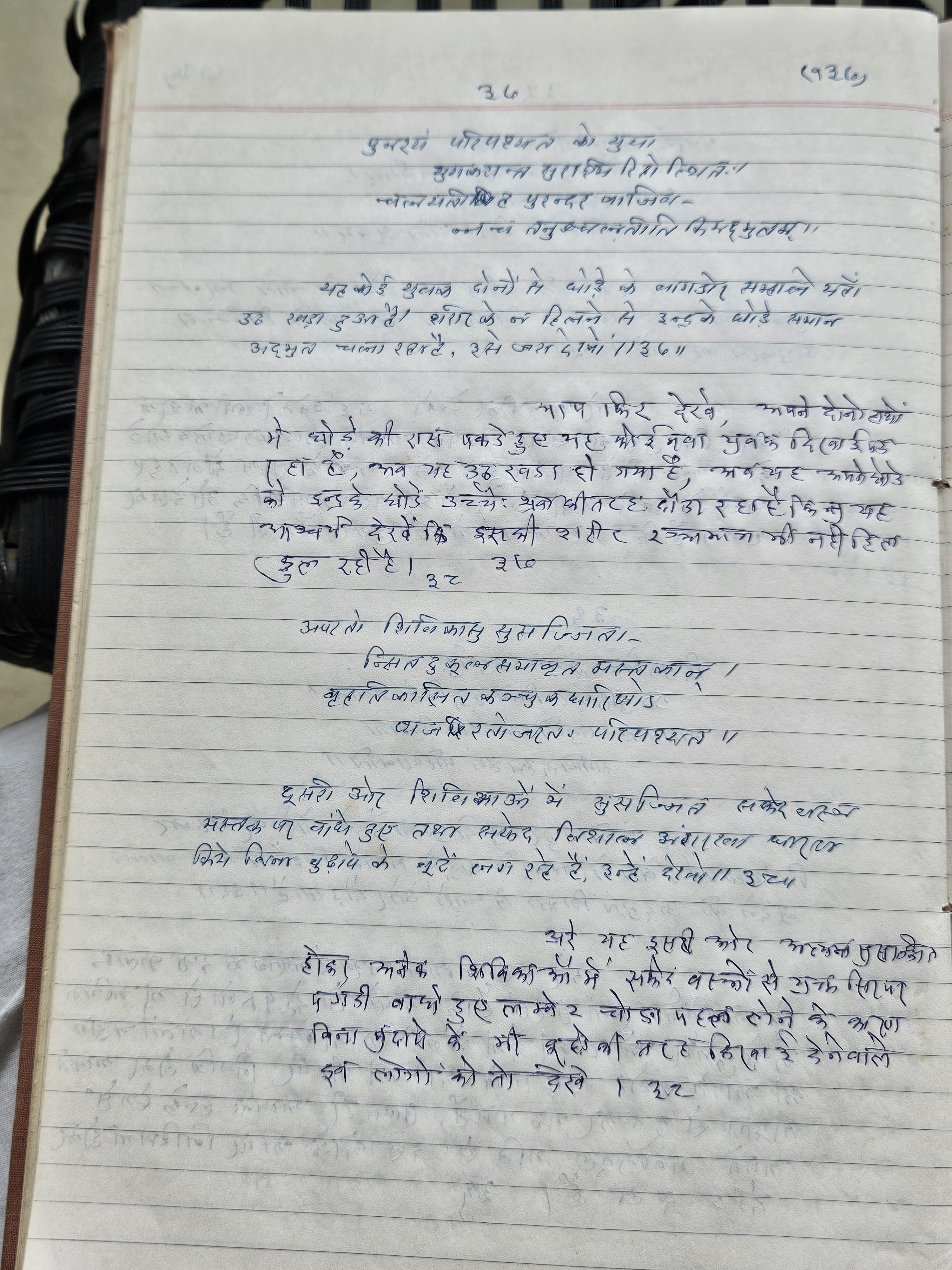
पुनरयं परिपश्यत को युवा
युगकरा[unclear: न्त]धुरा[unclear: श्चि]रिहोत्थितः ।
[unclear: न्योमयतो]ह पुरन्दरवाजिव-
न्न च तनुश्चलतीति किमद्भुतम् ॥ ३७ ॥
Manuscript NoteAI-assisted transcription
वृत्त: द्रुतविलम्बित। शीर्ष का अंक "३७" (कर्सिव ७ लैटिन "6" जैसा दिखता है)। पाद २ संदिग्ध: "युगकरान्त-" लिखा दिखता है ("युगकरात्त-", दोनों हाथों से थामी हुई, अभिप्रेत हो सकता है); "धुरा" के बाद का अक्षर "श्चि"/"ग्नि" जैसा; अन्तिम शब्द "स्थितः"/"त्थितः" — हिन्दी "यहाँ उठ खड़ा हुआ है" से "इहोत्थितः" पढ़ा गया। पाद ३ संदिग्ध: आरम्भ "न्योमयतो" जैसा, फिर एक अक्षर काटा गया, फिर "ह"; छन्द के अनुसार "पुरन्दर" से पहले ।।।ऽ। (पाँच अक्षर) चाहिए। पाद ४: "न च तनुश्चलतीति" (शरीर नहीं हिलता)।
Manuscript Note (EN)AI-assisted transcription
Metre: Drutavilambita. The heading numeral is "३७" (the cursive ७ looks like a Latin "6"). Pāda 2 is doubtful: it seems to read "युगकरान्त-" ("युगकरात्त-", held in both hands, may be meant); the letter after "धुरा" looks like "श्चि"/"ग्नि"; the last word looks like "स्थितः"/"त्थितः", read "इहोत्थितः" from the Hindi "has stood up here". Pāda 3 is doubtful: it begins like "न्योमयतो", then a letter is struck out, then "ह"; the metre needs five syllables ।।।ऽ। before "पुरन्दर". Pāda 4: "न च तनुश्चलतीति" (his body does not move).
English Translation (of the Sanskrit)AI-assisted translation
Look again: who is this youth who, holding the reins in both hands, has stood up here? [unclear] like Indra's horse, and yet his body does not move — what a wonder! (37)
Translationamanuensis's hand
यह कोई युवक दोनों से घोड़े के लगाम सम्भाले यहाँ उठ खड़ा हुआ है । शरीर के न हिलने से इन्द्र के घोड़े समान अद्भुत चला रहा है, इसे जरा देखो ॥ ३७ ॥
English Translation (of the Hindi)AI-assisted translation
Some youth, holding the horse's reins with both [hands], has stood up here. With his body not moving, he is riding wonderfully, like Indra's horse; just look at him. (37)
Notesgrandfather's hand
आप फिर देखें, अपने दोनों हाथों में घोड़े की रास पकड़े हुए यह कोई नया युवक दिखाई दे रहा है, अब यह उठ खड़ा हो गया है, अर्थात् यह अपने घोड़े को इन्द्र के घोड़े उच्चैःश्रवा की तरह दौड़ा रहा है किन्तु यह आश्चर्य देखें कि इसका शरीर रत्तीमात्र भी नहीं हिल डुल रहा है । ३७
English NotesAI-assisted translation
Look again: holding the horse's reins in both hands, some new youth comes into view; now he has stood up, that is, he is galloping his horse like Uccaiḥśravas, Indra's horse. But see the wonder: his body does not move or shake even a hair's breadth. (37)
Verse 38
Shlokamanuensis's hand
अपरतो शिबिकासु सुसज्जिता-
न्सितदुकूलसमावृतमस्तकान् ।
बृहति[unclear: कालित]कञ्चुकधारिणो
[unclear: अ]ज~~[कटा हुआ]~~रतो जरतः परिपश्यत ॥ ३८ ॥
Manuscript NoteAI-assisted transcription
वृत्त: द्रुतविलम्बित। पाद ३: "बृहति" के बाद "कालित" जैसा पढ़ा गया (हिन्दी: "सफेद विशाल अंगरखा"); छन्द ठीक बैठता है, अर्थ संदिग्ध। पाद ४: पहला अक्षर "प्य"/"ह्य" जैसा दिखता है, पर छन्द (।।।ऽ) और हिन्दी ("बिना बुढ़ापे के बूढ़े") "अजरतो जरतः" चाहते हैं; "ज" के बाद एक अक्षर काटा गया। पाद १ "अपरतो" (अपरतः के स्थान पर) जैसा लिखा है वैसा रखा गया। अमानुएन्सिस की हिन्दी का अंक "३८"।
Manuscript Note (EN)AI-assisted transcription
Metre: Drutavilambita. Pāda 3: after "बृहति" the word reads like "कालित" (the Hindi has "a large white tunic"); it scans, but the sense is doubtful. Pāda 4: the first letter looks like "प्य"/"ह्य", but the metre (।।।ऽ) and the Hindi ("old without old age") want "अजरतो जरतः"; a letter after "ज" is struck out. Pāda 1 "अपरतो" (for अपरतः) is kept as written. The amanuensis's Hindi is numbered "३८".
English Translation (of the Sanskrit)AI-assisted translation
On the other side, look at these men in palanquins, well adorned, their heads wrapped in white silk, wearing large [unclear] tunics: old, though not aged. (38)
Translationamanuensis's hand
दूसरी ओर शिबिकाओं में सुसज्जित सफेद वस्त्र मस्तक पर बाँधे हुए तथा सफेद विशाल अंगरखा धारण किये बिना बुढ़ापे के बूढ़े लग रहे हैं, इन्हें देखो ॥ ३८ ॥
English Translation (of the Hindi)AI-assisted translation
On the other side, well adorned in palanquins, with white cloth tied on their heads and wearing large white tunics, they look old without old age; look at them. (38)
Notesgrandfather's hand
अरे यह इधर ही ओर [unclear: अत्यन्त प्रसन्न] होकर अनेक शिबिकाओं में सफेद वस्त्रों से युक्त सिर पर पगड़ी बाँधे हुए लम्बे २ चोगा पहने होने के कारण बिना बुढ़ापे के भी बूढ़ों की तरह दिखाई देने वाले इन लोगों को तो देखें । ३८
English NotesAI-assisted translation
Oh, just look at these people right here, [unclear: very happy], in many palanquins: dressed in white, with turbans tied on their heads and wearing long robes, they look like old men though they are not old. (38)